14
October 2026
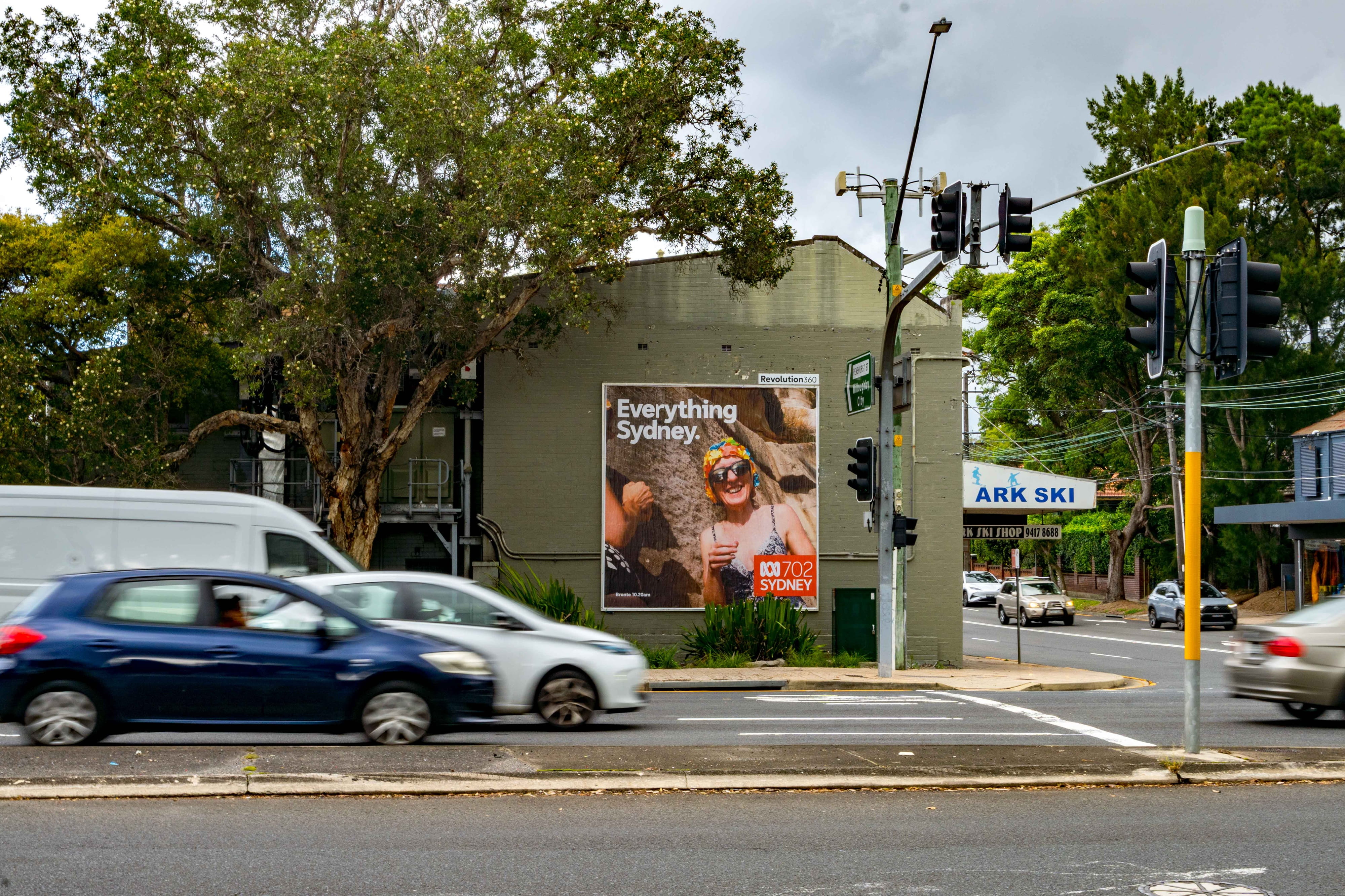
Sydney is the most expensive media market in Australia, which makes poster location choice matter more here than anywhere else. The good news is that the city’s geography does a lot of the work for you. The harbour, the rail spines and the hard edges between suburbs concentrate Sydney’s walkable, culturally engaged audiences into a handful of tight precincts, most of them within five kilometres of the CBD.
This guide covers the precincts we would put on almost every Sydney poster plan, what the available data says about each, and how to weight them for different audiences.
The short answer
Where is street poster advertising most effective in Sydney? In the inner ring of pedestrian-first suburbs around the CBD: Newtown and Enmore in the Inner West, Surry Hills and Darlinghurst to the south-east, and the George Street and Pitt Street corridors in the city centre. Bondi and Bondi Junction add a lifestyle-focused eastern audience. These precincts combine dense residential populations, heavy foot traffic across the whole day, and audiences that pay attention to what is on the walls.
Sydney’s foot traffic picture in 2026
Two things shape where Sydney’s pedestrians are right now.
The first is the Sydney Metro. Since the City section opened in August 2024, more than 120,000 weekday trips are made under the harbour, with Central handling about 22,800 metro trips a day and Martin Place 20,600. Gadigal station, beside Town Hall, has averaged around 15,700 passengers a day. Colliers’ 2025 CBD Retail Report credits the Metro network with driving Sydney’s CBD foot traffic recovery, and the Bankstown extension due in late 2026 will pull a large Inner West and south-west catchment onto the same line.
The second is hybrid work. Sydney’s CBD, like Melbourne’s, is still recovering toward 2019 pedestrian levels, and the shortfall sits mostly in weekday commuter peaks. Inner suburbs have benefited: people spend more of their week within walking distance of home, which means more habitual trips along the same high streets. That is exactly the pattern posters need.
The City of Sydney tracks all of this through twice-yearly walking count surveys at around 100 locations from 6am to midnight, supplemented by automated counters at four city-centre sites. Its dashboards consistently show the George Street and Pitt Street corridors as the densest pedestrian environments in the local area.
Newtown and Enmore: the Inner West spine
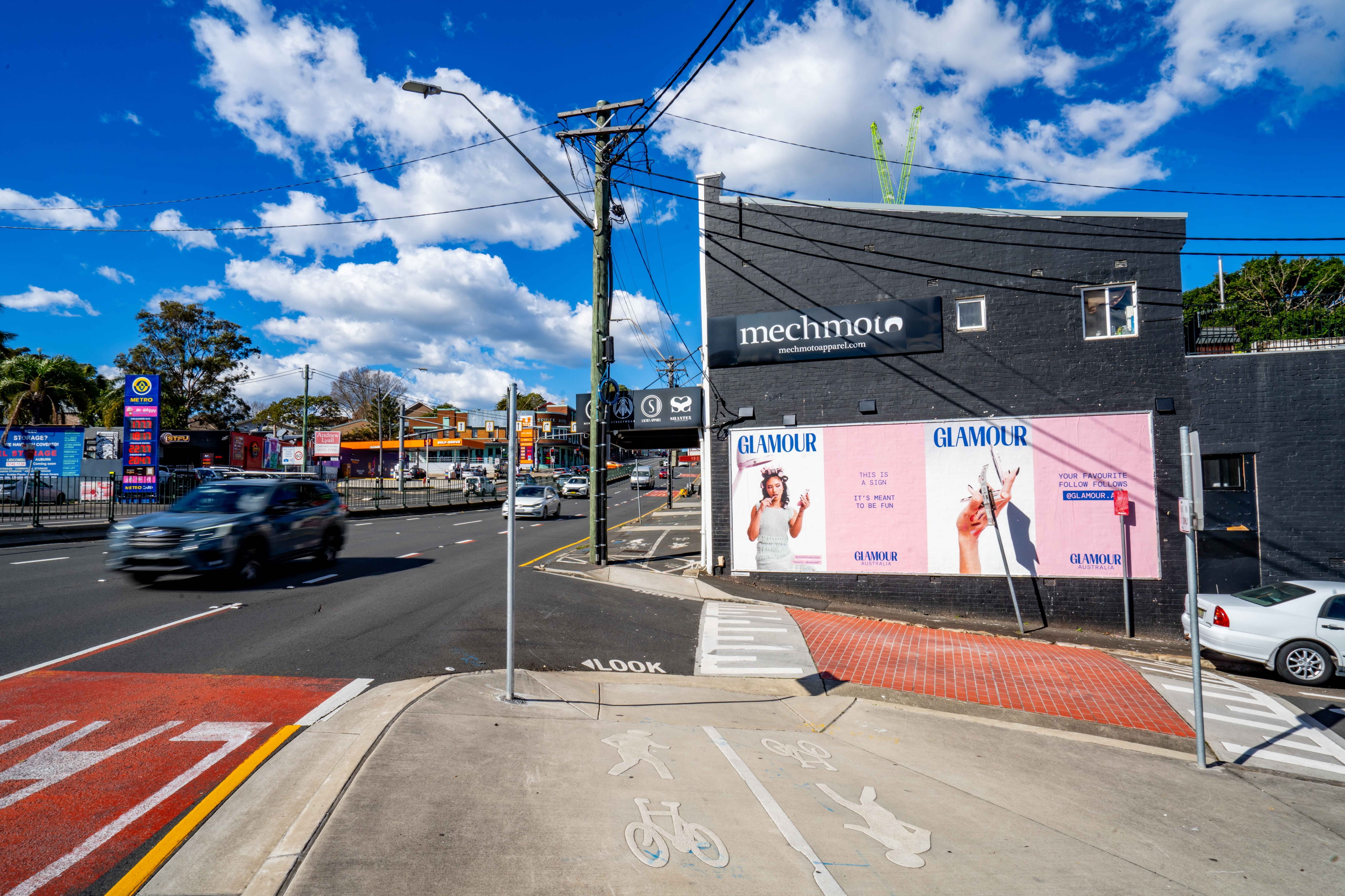
King Street, Newtown and its continuation along Enmore Road is the longest unbroken strip of independent retail, hospitality and live music in Sydney. It runs from the southern edge of the University of Sydney, past Newtown station, to the Enmore Theatre and on toward Marrickville. Along the way it collects students, live music crowds, inner-west residents and weekend visitors on a single, walkable line.
Enmore Road was designated NSW’s first Special Entertainment Precinct, which has protected venue density along the corridor and reinforced its status as the city’s live music heartland. The audience is young, culturally literate and unusually receptive to posters; this is a neighbourhood where the walls are part of how people find out what is on.
Further west, Marrickville has grown into a brewery, food and creative-industry hub with its own strong weekend foot traffic. To the north, Glebe Point Road and the Broadway corridor connect the University of Sydney, UTS and Central Park in Chippendale, adding a large tertiary audience.
Best for: music and festivals, film and streaming, beverage brands, cause-based campaigns, anything with a countercultural edge.
Watch for: the Bankstown Metro extension will make Marrickville and Dulwich Hill more accessible from the CBD and north shore, which is likely to lift weekend traffic along the western end of the corridor.
Surry Hills, Darlinghurst and Oxford Street
Immediately south-east of the CBD, Surry Hills is one of the most densely populated suburbs in Australia. The 2021 Census recorded roughly 15,800 residents in about 1.3 square kilometres, close to 12,000 people per square kilometre, with a population skewed toward professionals in their twenties and thirties. Crown Street, Bourke Street, Devonshire Street and the laneways between them are lined with cafes, bars, design studios and independent retail, and the suburb sits within a ten-minute walk of Central station.
Oxford Street through Darlinghurst and Paddington connects Surry Hills to the eastern suburbs and remains one of Sydney’s defining nightlife and cultural corridors. Taylor Square in particular is a natural poster environment: heavy pedestrian counts, slow-moving crowds and a highly engaged audience.
Best for: hospitality, fashion, arts and culture, LGBTQIA+ events and campaigns, premium challenger brands.
Sydney CBD: George Street, Pitt Street and the Metro stations
The pedestrianisation of George Street for the light rail changed the CBD’s centre of gravity. The boulevard from Town Hall to Circular Quay is now the city’s main walking corridor, feeding Pitt Street Mall, the Queen Victoria Building and Martin Place. With the Metro layered on top, CBD foot traffic increasingly concentrates around the interchanges: Central, Town Hall and Gadigal, Martin Place, Wynyard and Barangaroo.
For poster campaigns the CBD is best treated as a reach layer rather than a frequency layer. It delivers mass exposure to workers, shoppers and visitors, but the audience is broader and less culturally targeted than the inner suburbs. Sites on the CBD fringe, around Central, Haymarket and the southern end of George Street, tend to combine the best of both.
Best for: national brand launches, mass-appeal entertainment and events, retail and fashion, tourism.
Bondi, Bondi Junction and the eastern beaches
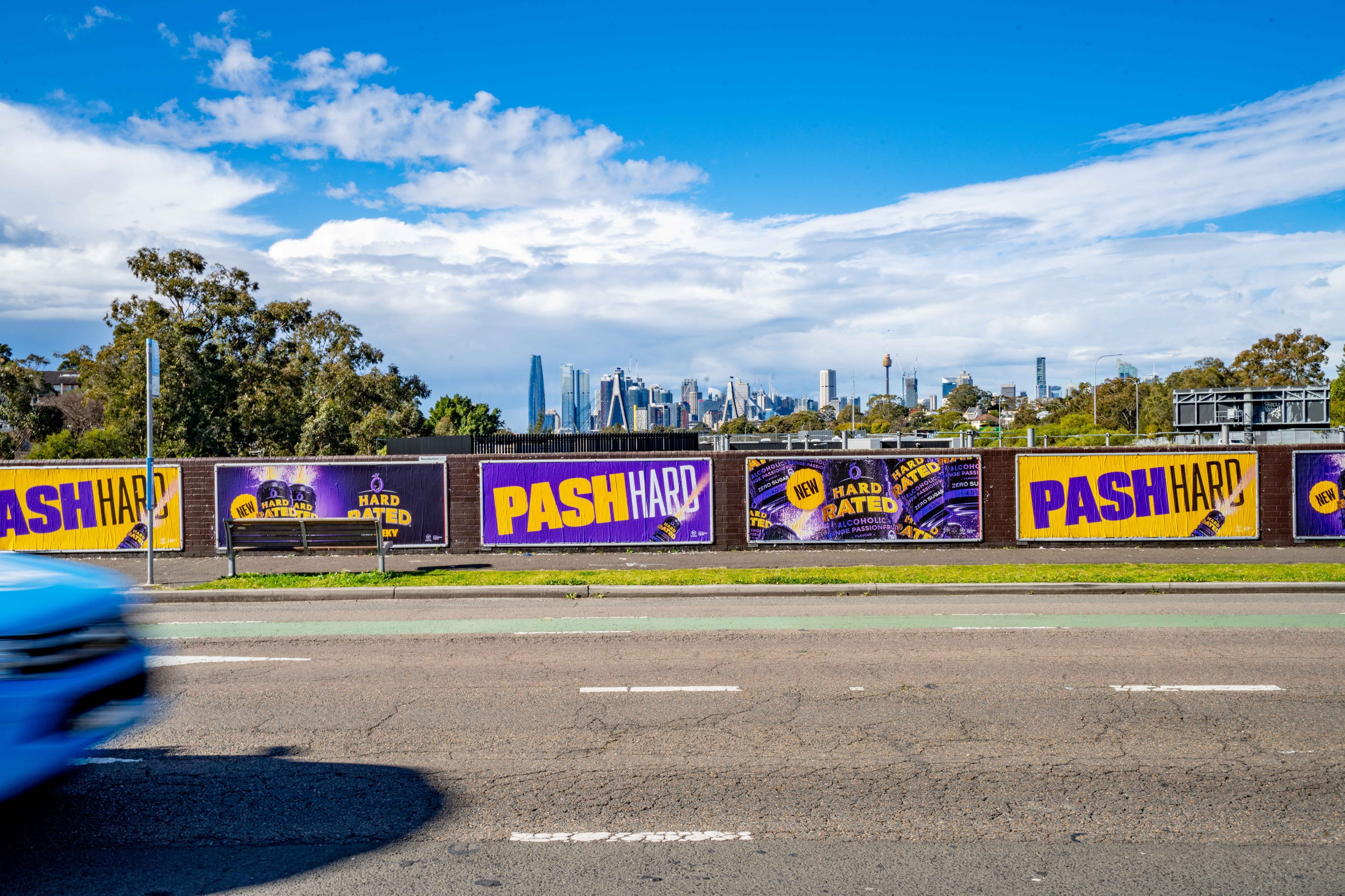
Bondi is a different proposition from the inner suburbs. Its audience is affluent, fitness-focused and heavily international, and foot traffic peaks on weekends and summer mornings rather than weekday commutes. Campbell Parade, Hall Street and Bondi Road carry strong, predictable pedestrian volumes with a lifestyle-oriented skew, and the Bondi Junction interchange adds a large daily commuter and shopping flow.
Best for: fitness and wellness, swimwear and apparel, tourism, consumer tech, food and beverage, summer campaigns.
Other Sydney precincts worth a look
- Redfern and Waterloo: rapidly gentrifying, close to the Metro, with a growing creative and hospitality scene along Redfern Street and Regent Street.
- Glebe and Chippendale: university-adjacent, with Central Park and Spice Alley pulling students and young professionals.
- Manly: The Corso and the ferry wharf deliver heavy weekend and tourist traffic with a beach-lifestyle audience, useful for campaigns that need a northern beaches presence.
- Parramatta: Church Street and the Parramatta Square precinct offer the largest walkable audience in western Sydney, and Metro West will strengthen it further from 2032.
How to plan a Sydney street poster campaign
Start with the Inner West and Surry Hills. If the budget only stretches to two precincts, these two deliver the strongest combination of density, dwell time and cultural engagement in the city.
Add the CBD for reach, Bondi for lifestyle skew. Treat the city centre as a broadcast layer and Bondi as a targeting layer, and weight them according to the audience.
Think in corridors, not points. Sydney’s poster precincts are linear: King Street, Crown Street, Oxford Street, George Street. Sites spaced along a corridor deliver repeat exposure to the same walkers far more efficiently than sites scattered across suburbs.
Run for at least four weeks, ideally eight. Analytic Partners’ Australian research found OOH campaigns running beyond eight weeks delivered nearly twice the ROI of two-week campaigns, and the same body of work found suburban placements returned up to 37 per cent more than CBD-only activity.
Ask for site-level data. A good poster company can tell you, site by site, what the surrounding venues and retailers are, when the foot traffic peaks and how the audience skews.
Frequently asked questions
What are the best suburbs for street poster advertising in Sydney?
Newtown and Enmore, Surry Hills and Darlinghurst, the CBD (George Street and Pitt Street), and Bondi. Marrickville, Redfern, Glebe and Chippendale are strong secondary options.
How busy is Sydney’s CBD on foot?
Sydney’s CBD foot traffic is still recovering toward 2019 levels according to Colliers, but the Metro has added more than 120,000 weekday trips under the harbour, with Central and Martin Place each handling more than 20,000 metro trips a day on top of existing rail patronage.
Is Sydney or Melbourne better for street posters?
Melbourne has more poster-friendly high streets and a more street-literate audience; Sydney offers higher-value audiences in a more compact inner ring. Most national campaigns run both.
Planning a Sydney campaign?
Revolution360 is headquartered in Pyrmont and has been putting posters and wall murals on Sydney’s streets for years. We run our own site network across the Inner West, Surry Hills, the CBD, the eastern suburbs and beyond, and we can share site-level foot traffic and venue data for any precinct in this guide. Get in touch with the Sydney team to talk through your campaign.
Looking at the other capitals? See our guides to street poster advertising in Melbourne and street poster advertising in Brisbane, or the eastern seaboard overview.
Sources
- Railway-News, Sydney Metro City marks first year of passenger services (August 2025)
- Infrastructure Magazine, Gadigal Station recognised among world’s most beautiful transport interiors (January 2026)
- Colliers, CBD Retail Report 2025
- City of Sydney, Walking counts
- ABS, 2021 Census
- B&T, Analytic Partners OOH ROI study (May 2026)
- oOh!media / Analytic Partners, Out of Home is a growing driver of ROI (2024)


