28
October 2026
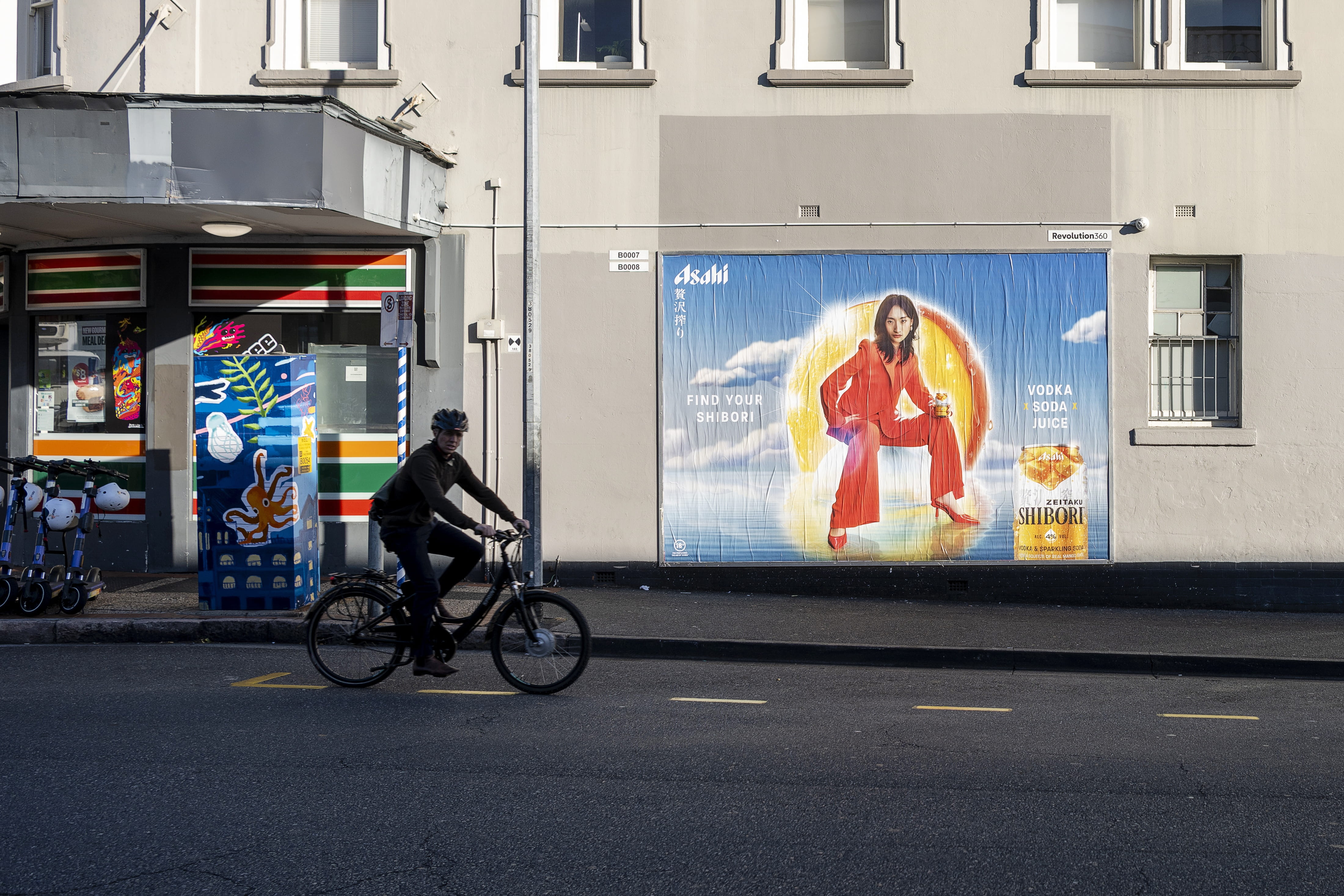
Brisbane is the growth story of Australia’s east coast. Its city centre has already passed pre-pandemic foot traffic, its inner suburbs are densifying quickly, and the 2032 Olympic and Paralympic Games are pulling investment into the precincts where posters work best. For advertisers, that adds up to strong and rising street audiences at media costs that still sit well below Sydney and Melbourne.
This guide covers the Brisbane precincts that belong on most poster plans, what council and industry data says about each, and how to weight them for different audiences.
The short answer
Where is street poster advertising most effective in Brisbane? In Fortitude Valley, the Queen Street Mall precinct and its CBD fringes, and West End and South Brisbane. Fortitude Valley is the city’s nightlife and live music capital and the single most important poster precinct; Queen Street Mall is Queensland’s busiest pedestrian environment; West End is Brisbane’s independent, arts-literate strip. Paddington, New Farm, Milton and Woolloongabba add affluent village audiences and event-day crowds.
Brisbane’s foot traffic picture in 2026
Colliers’ 2025 CBD Retail Report found that Brisbane was one of only three Australian capitals where CBD foot traffic had already exceeded its 2019 benchmark, while Sydney and Melbourne were still recovering. The same report links a wave of retailer interest in the Brisbane CBD to the lead-in to 2032, with brands securing prime positions ahead of the Games.
Population growth is the other driver. Lord Mayor Adrian Schrinner has put the figure at more than 600 people moving to Brisbane every week, and Council’s precinct plans for Fortitude Valley, South Brisbane and West End, and Woolloongabba are all designed around higher-density inner-city living. More residents within walking distance of the same high streets is precisely the trend posters benefit from.
Fortitude Valley: the non-negotiable
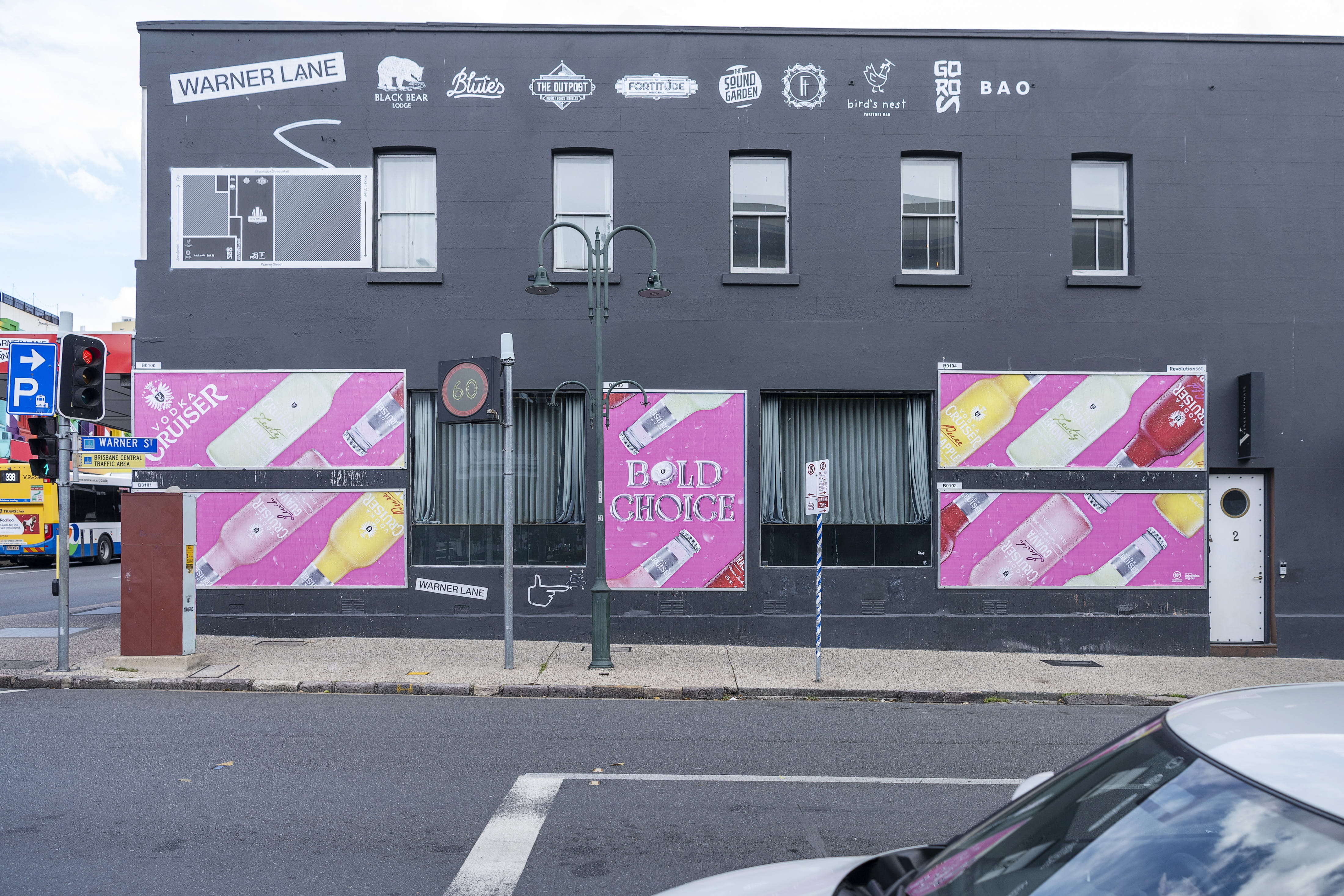
The Valley is Brisbane’s nightlife and live music capital and its most important poster precinct. Brunswick Street Mall, Ann Street and Wickham Street carry heavy evening and weekend pedestrian traffic, anchored by venues such as The Tivoli, The Fortitude Music Hall and a dense run of bars and clubs. Council describes the Valley Malls as Brisbane’s premier night-time entertainment destination, with most businesses trading from 9am to 2am and more than 150 activations a year.
The Valley became Australia’s first Special Entertainment Precinct in 2006, and APRA AMCOS notes that live music venues in the precinct have doubled since. That venue density is what makes the Valley work for posters: a walkable grid where audiences move between multiple venues on the same night and pass the same walls repeatedly. BIGSOUND, held in the Valley each September, was credited with more than $20 million in economic impact in 2025 and turns the precinct into the centre of the national music industry for a week.
James Street, at the Valley’s eastern edge, adds a premium fashion, design and dining audience that is very different in profile but only a few hundred metres away. Council’s new Fortitude Valley Sustainable Growth Precinct Plan will add substantial residential density around the station and along Wickham, Ann and Brunswick Streets over the coming years.
Best for: music and festivals, beverage, nightlife and hospitality, youth brands, fashion (James Street end).
Queen Street Mall and the CBD
Queen Street Mall is the busiest pedestrian precinct in Queensland by a wide margin. Brisbane City Council figures cited by Central Ward councillor Vicki Howard put average daily pedestrian movements through the mall at more than 220,000 in October 2025, with July 2025 peaking above 248,000 a day. The Lord Mayor has previously described the mall as generating more than one million pedestrian movements a week, and it hosts more than 500 retailers across street frontages, seven shopping centres and two heritage arcades.
The precinct is expanding. Council is extending the mall along Albert Street between Elizabeth and Mary Streets, timed to the opening of the Albert Street Cross River Rail station, which will push a large new commuter flow directly into the retail core and create a walkable spine from Roma Street Parkland to the City Botanic Gardens.
Posters cannot go in the mall itself, but the CBD streets that feed it are the play: Edward, Adelaide, Albert and George Streets, the Central and Roma Street station surrounds, and the Queen Street corridor toward the Valley. These fringe sites capture the mall’s audience on the way in and out.
Best for: retail, national launches, events, tourism, anything needing mass reach in Queensland.
West End and South Brisbane
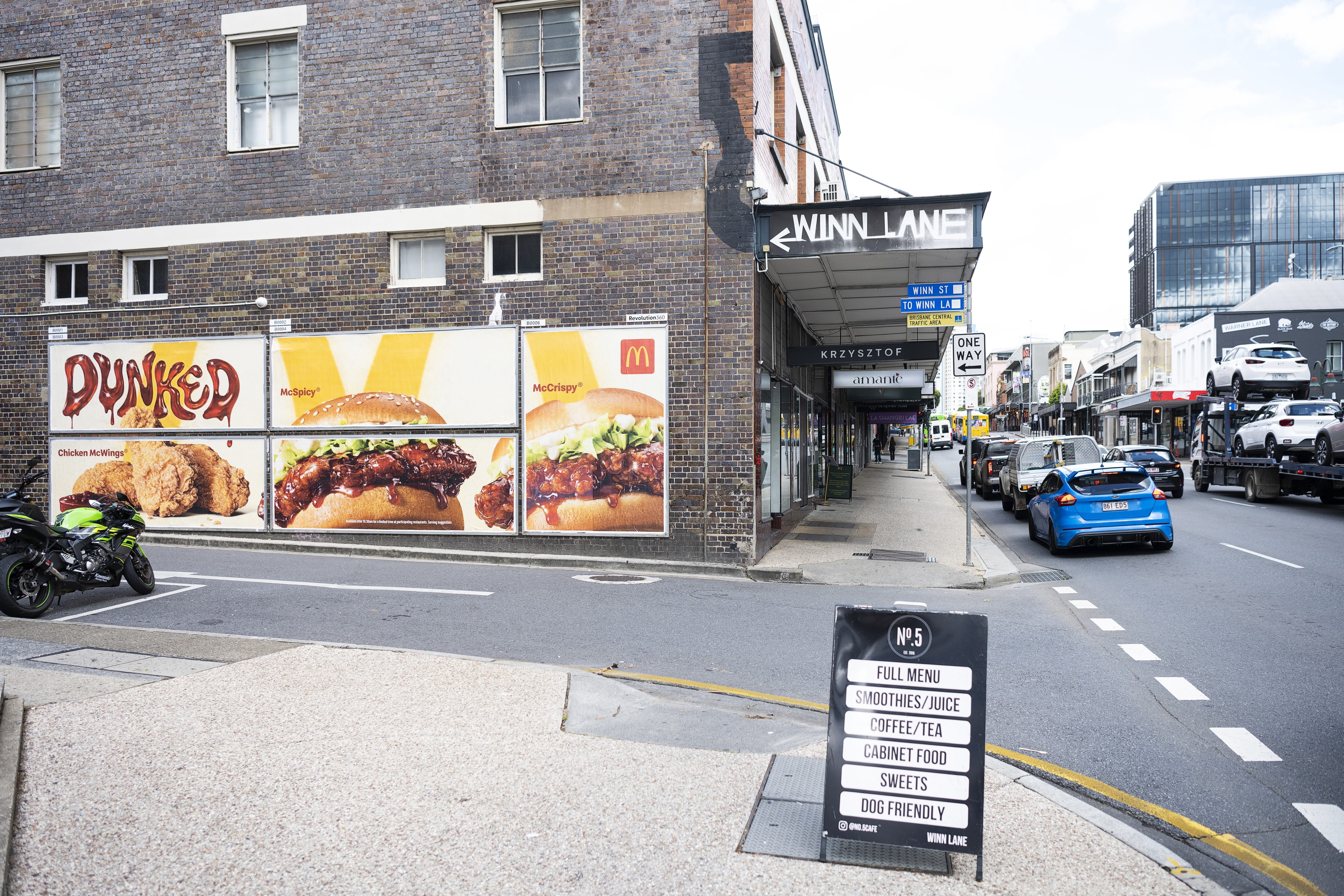
Boundary Street in West End is Brisbane’s closest equivalent to Newtown or Fitzroy: independent, multicultural, politically engaged and full of cafes, bars, bookshops and small venues. It sits within walking distance of South Bank, the Queensland Cultural Centre (QPAC, GOMA and the State Library) and the residential towers of South Brisbane, and it is on the doorstep of Griffith University’s South Bank campus and Brisbane State High. The audience is young, arts-literate and highly receptive to posters, and Council’s South Brisbane and West End precinct plan is adding density across the peninsula.
Best for: arts and culture, film, cause-based campaigns, food and beverage, sustainability brands.
Paddington and Milton
Given Terrace and Latrobe Terrace in Paddington offer a boutique retail and cafe strip with an affluent, design-conscious audience. Nearby Milton is home to Suncorp Stadium, which delivers enormous event-day crowds along Caxton Street and Park Road for NRL, Super Rugby, A-League and major concerts. Caxton Street’s pub strip is a poster environment in its own right on match nights.
Best for: premium lifestyle brands, sport and events, hospitality.
New Farm, Teneriffe and Woolloongabba
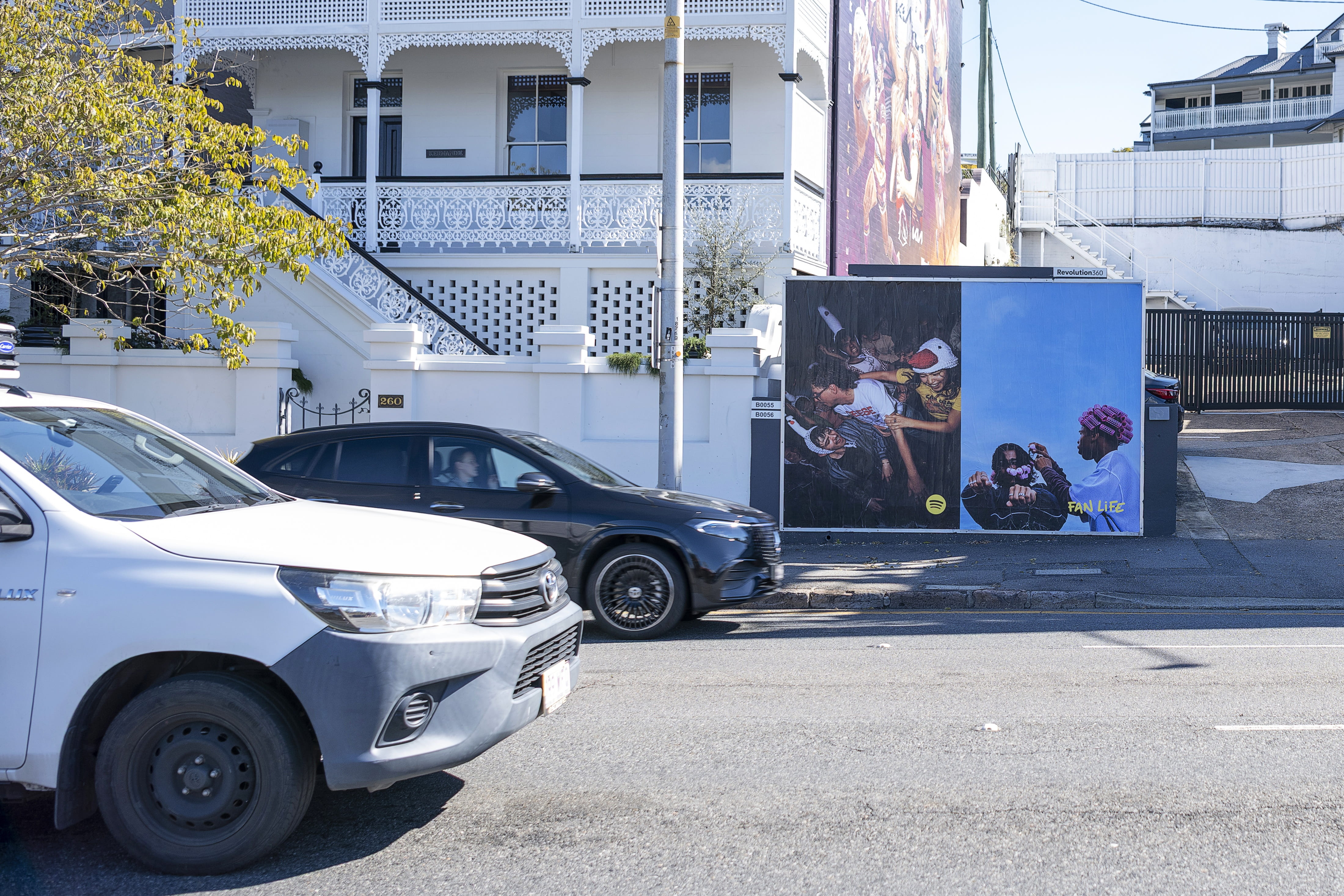
New Farm’s Brunswick Street and Merthyr Road form a village strip with a dense, affluent residential catchment and heavy weekend foot traffic toward New Farm Park and the Brisbane Powerhouse. Teneriffe adds riverside apartment density and a strong cafe culture. On the south side, Woolloongabba’s Logan Road antique and dining precinct sits beside the Gabba, and Council’s renewal plan for the suburb is adding residents ahead of its Olympic role.
Best for: hospitality, premium retail, sport and events.
Other Brisbane precincts worth a look
- Kelvin Grove and Herston: QUT’s Kelvin Grove campus and the Kelvin Grove Urban Village deliver a concentrated student audience close to the Valley.
- Stones Corner and Greenslopes: a revived village strip on Logan Road with a young professional and family audience, and a Council renewal precinct.
- Toowong and St Lucia: the University of Queensland catchment, useful for campaigns targeting tertiary students on the west side.
How to plan a Brisbane street poster campaign
The Valley and the CBD fringe are the core. Between them they cover Brisbane’s nightlife audience and its mass retail audience. Most campaigns should start here.
Add West End for the creative and student skew. It is the precinct most likely to act on cultural, arts and cause-led messages.
Use event calendars. Suncorp Stadium, the Gabba, the Riverstage, BIGSOUND and Brisbane Festival all create predictable surges in specific corridors. Timing a campaign to those surges is one of the most efficient things a Brisbane poster buyer can do.
Lean into Brisbane’s value. With CBD foot traffic above pre-pandemic levels and media costs below the southern capitals, Brisbane is the city where a fixed budget buys the most repeat exposure. Analytic Partners’ research found multi-format OOH campaigns lifted ROI by around 30 per cent and campaigns beyond eight weeks returned nearly twice the ROI of two-week bursts; Brisbane’s cost base makes both easier to achieve.
Plan for 2032 now. The Olympic lead-in is already changing the inner city. Precincts around the Gabba, Suncorp Stadium, the Valley and the CBD will only get busier.
Frequently asked questions
What are the best suburbs for street poster advertising in Brisbane?
Fortitude Valley first, then the CBD streets around Queen Street Mall, West End and South Brisbane, Paddington and Milton, New Farm and Woolloongabba. Kelvin Grove, Stones Corner and Toowong are strong secondary options.
How busy is Queen Street Mall?
Brisbane City Council figures put average daily pedestrian movements at more than 220,000 in October 2025, with July 2025 exceeding 248,000 a day. The mall is expanding along Albert Street ahead of the Cross River Rail station opening.
Is Brisbane a good city for outdoor poster advertising?
Yes. Brisbane’s CBD foot traffic has already passed 2019 levels, the city is adding more than 600 residents a week, Fortitude Valley is Australia’s original Special Entertainment Precinct, and media costs remain below Sydney and Melbourne.
Planning a Brisbane campaign?
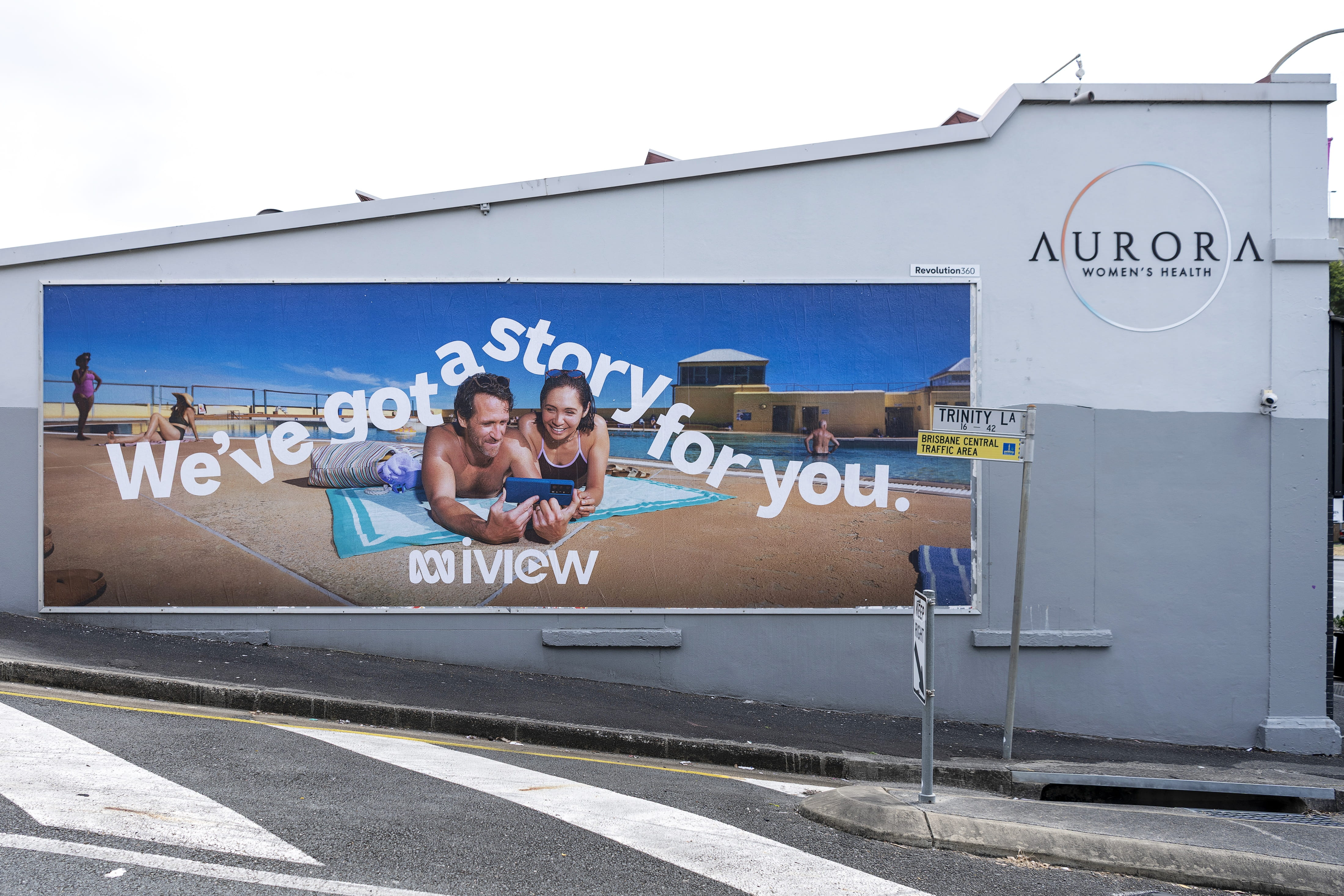
Revolution360 runs its own street poster and wall mural network across Brisbane’s inner city, from the Valley and the CBD fringe to West End, Paddington and New Farm. We can share site-level foot traffic and venue data for any precinct in this guide. Get in touch with the Brisbane team to talk through your campaign.
Looking at the other capitals? See our guides to street poster advertising in Sydney and street poster advertising in Melbourne, or the eastern seaboard overview.
Sources
- Colliers, CBD Retail Report 2025
- The Urban Developer, Brisbane’s Fortitude Valley to ‘grow up’ under new plan (March 2026)
- Brisbane City Council, Valley Malls, Fortitude Valley
- APRA AMCOS, Entertainment Precincts signal a cultural transformation (March 2025)
- No Barriers, BIGSOUND set to take over Fortitude Valley (August 2026)
- Cr Vicki Howard, Queen Street Mall Expansion (November 2025)
- ABC News, Brisbane’s Queen Street Mall celebrates 40 years (2022)
- Brisbane City Council, Queen Street Mall and Queen Street Mall: Brisbane’s CBD shopping strip
- oOh!media / Analytic Partners, Out of Home is a growing driver of ROI (2024)


