21
October 2026
Melbourne is the strongest street poster market in Australia, and it is not close. The city’s grid, its tram network and its long history of inner-suburban high streets have created dozens of kilometres of poster-friendly streetscape. Just as importantly, Melburnians are used to reading the street. Gig posters, exhibition posters and festival posters are part of how the city talks to itself, which means a well-placed poster here is treated as information rather than interruption.
This guide covers the precincts that belong on most Melbourne poster plans, what the City of Melbourne’s own sensor data says about foot traffic, and how to weight each precinct for different audiences.
The short answer
Where is street poster advertising most effective in Melbourne? In the inner-suburban high streets north and east of the CBD, above all Fitzroy and Collingwood (Brunswick, Smith, Gertrude and Johnston Streets), then Brunswick and Carlton (Sydney Road and Lygon Street), Richmond (Swan Street and Bridge Road), Windsor and Prahran (Chapel Street) and St Kilda (Acland and Fitzroy Streets). The CBD adds mass reach through Swanston Street, Bourke Street Mall and the laneways. A typical Melbourne campaign combines the CBD with two or three of these precincts.
What Melbourne’s pedestrian data tells us
Melbourne has an advantage no other Australian city can match: an automated pedestrian counting system that has been running since 2009, with hourly, open data across dozens of CBD sensors. Sensor locations are chosen for retail and event activity, regular pedestrian use and the flows in and out of those areas, which makes the dataset unusually relevant to anyone planning street-level media.
A few findings stand out:
- Melbourne Central is the busiest sensor, historically averaging around 1,087 pedestrians per hour, with volumes fanning out from the three main rail nodes at Flinders Street, Southern Cross and Melbourne Central along Swanston and Elizabeth Streets.
- Weekday commuter traffic has not fully returned. Analysis reported in early 2026 put weekday foot traffic at Flinders Street Station at about 77 per cent of pre-pandemic levels and Southern Cross at 65 per cent, with hybrid work the main cause.
- Retail and events are filling the gap. The same sensors recorded sharp jumps around Bourke Street Mall after Mecca’s flagship opened in August 2025, and Colliers singles out the Bourke Street Mall revitalisation as a driver of Melbourne’s CBD recovery.
The practical lesson is that Melbourne’s CBD is now a retail, education, events and evening economy rather than a five-day commuter machine, while the inner suburbs have gained from people spending more of their week close to home.
Fitzroy and Collingwood: the benchmark
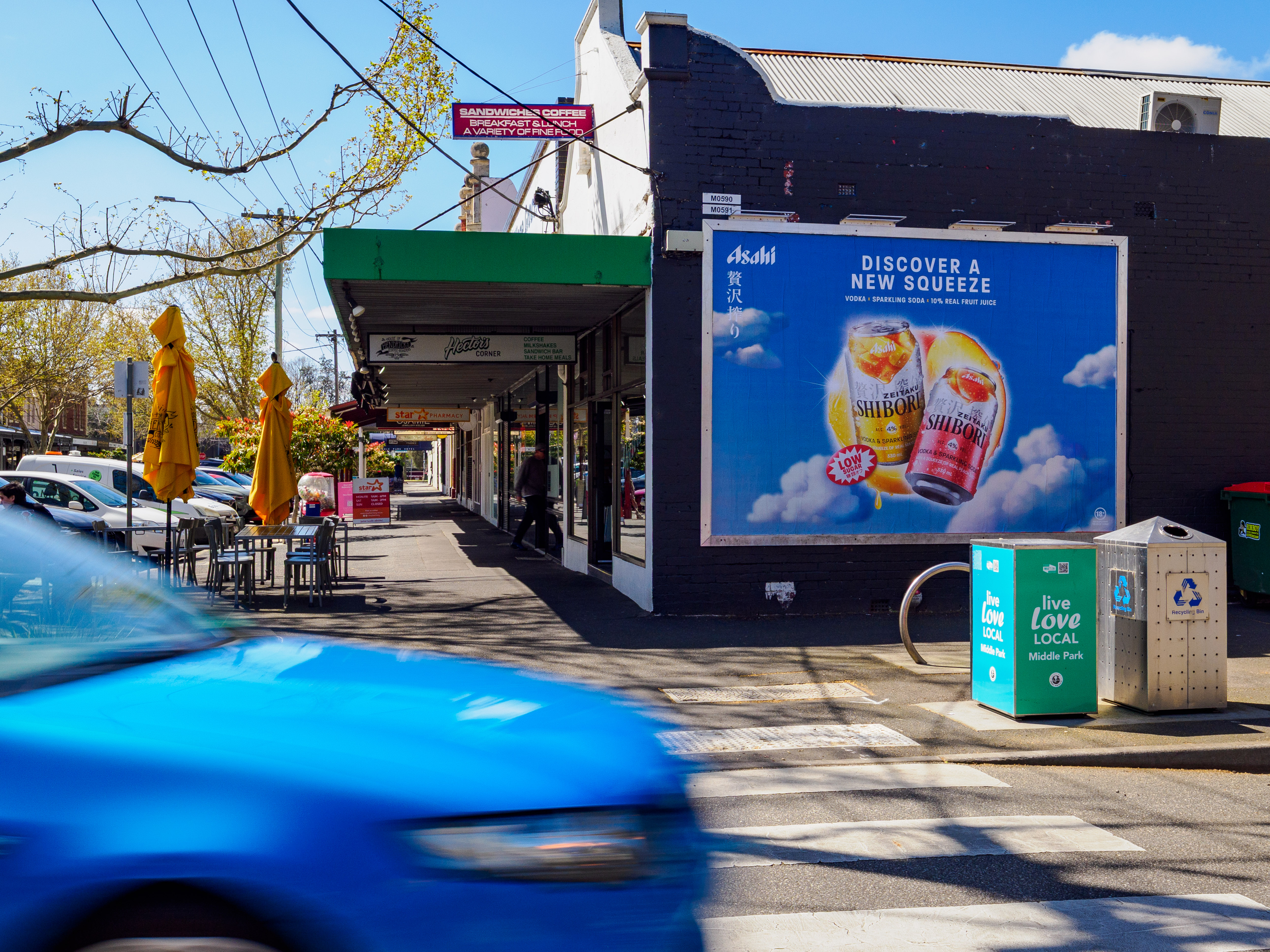
If there is a single benchmark for street poster advertising in Australia, it is Brunswick Street, Fitzroy. Together with Smith Street (regularly named among the world’s coolest streets by international travel media), Gertrude Street and Johnston Street, the Fitzroy and Collingwood precinct is dense with live music venues, galleries, independent fashion, record stores, breweries and bars. The audience is young, creative and highly attentive to street-level culture, and the streets are walked slowly and often.
This is the precinct where environmental fit is most obvious. Posters here are how the neighbourhood finds out what is on, and campaigns that understand that tone perform disproportionately well. The 86 and 11 trams run along Smith and Brunswick Streets respectively, and the precinct connects north into Clifton Hill and Northcote and south into the CBD’s north-east corner.
Best for: music and festivals, arts and culture, fashion, beverage, streaming and gaming, sustainability-led brands.
Melbourne CBD: Swanston, Bourke and the laneways
The Hoddle Grid delivers Melbourne’s mass reach. Swanston Street is the spine, linking Flinders Street Station, Federation Square, the Town Hall, Bourke Street Mall, the State Library and the RMIT precinct. Bourke Street Mall remains the retail heart, and the laneway network around Flinders Lane, Degraves Street, Centre Place and Hardware Lane carries heavy lunchtime and evening traffic with a strong hospitality and creative skew.
The City of Melbourne’s program to make Flinders Lane and the other “little” streets pedestrian-first will strengthen that laneway audience further. For poster buyers, the highest-value CBD zones are the Swanston Street corridor, the Bourke Street Mall surrounds, the RMIT and State Library edge, and the laneways south of Bourke.
Best for: retail, entertainment, student-facing brands, national launches, major events.
Brunswick, Carlton and the inner north
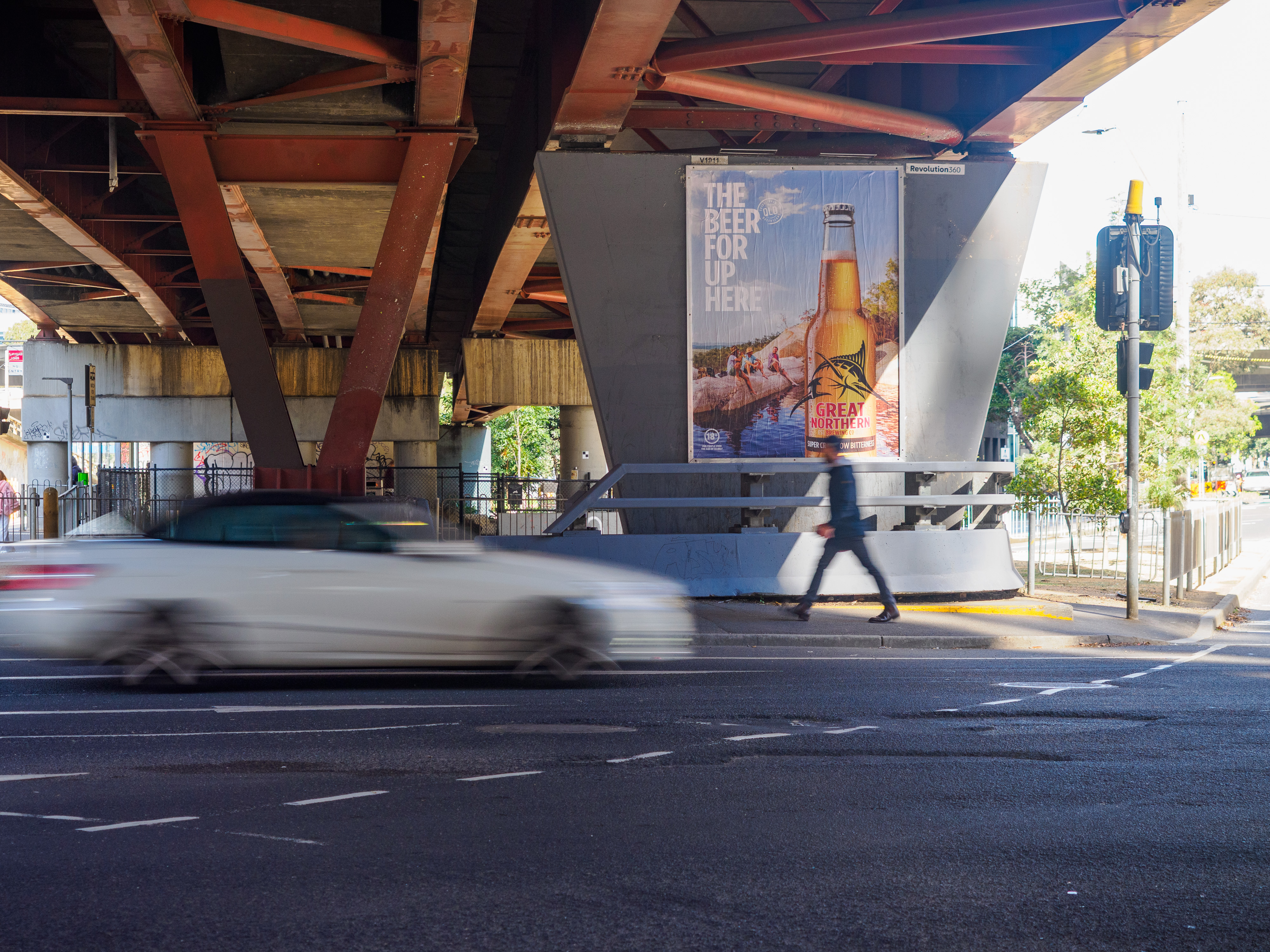
Sydney Road through Brunswick is one of the longest high streets in the country, mixing a large student population from RMIT and the University of Melbourne with long-established multicultural communities and a growing live music and hospitality scene. Lygon Street in Carlton sits on the university’s doorstep and carries heavy traffic from students and the Carlton dining crowd. High Street through Northcote and Thornbury extends the corridor north-east along the 86 tram, with a mature live music and vintage retail strip.
This is the precinct to prioritise when a campaign needs youth and student audiences at scale, and it pairs naturally with Fitzroy to cover the whole inner north.
Best for: student-facing brands, music, food and beverage, tertiary education, telco and consumer tech.
Richmond: Swan Street and Bridge Road
Swan Street has evolved into one of Melbourne’s leading dining and bar strips, with Richmond station at one end and the MCG and AAMI Park sporting precinct just beyond it. On match days and concert nights the corridor carries enormous crowds moving between the station, the venues and the pubs. Bridge Road remains a heavy-traffic retail and hospitality corridor, and Victoria Street’s Vietnamese food precinct adds another distinct audience.
Best for: sport and events, hospitality, beverage, apparel.
Windsor, Prahran and South Yarra: Chapel Street
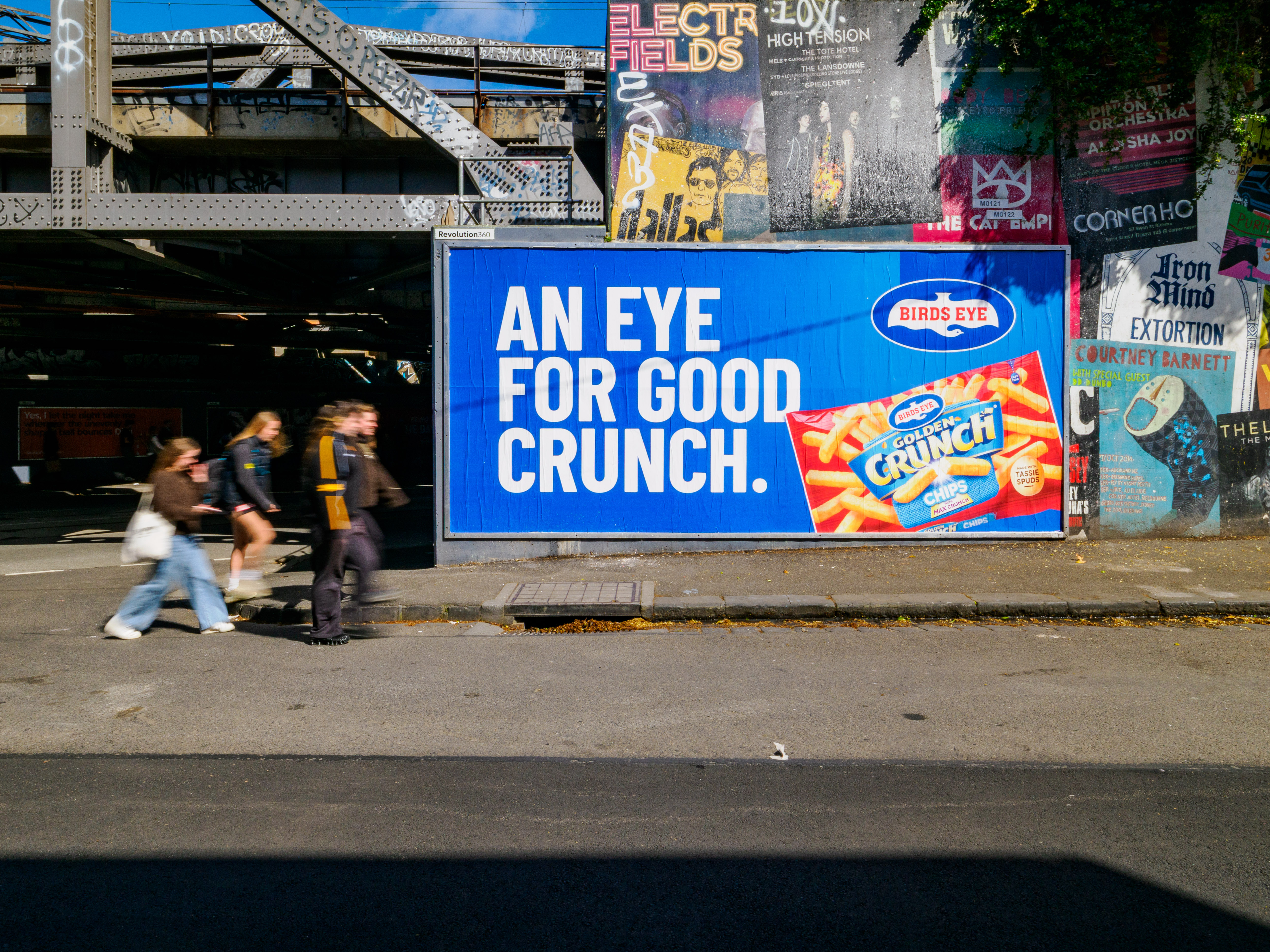
The Chapel Street spine has shifted over the past decade from high-street fashion toward hospitality and nightlife. The Windsor end is now one of Melbourne’s strongest late-night poster environments, Prahran adds Greville Street and the market precinct, and South Yarra retains a premium retail and dining audience around Toorak Road. The corridor is well served by the 78 tram and by South Yarra, Prahran and Windsor stations on the Sandringham line.
Best for: nightlife and hospitality, fashion, beauty, premium lifestyle brands.
St Kilda and the bayside strip
Acland Street and Fitzroy Street combine a dense residential population with heavy tourist and weekend traffic, plus a cluster of live venues including the Palais Theatre and the Espy. St Kilda is the natural southern bookend for a Melbourne campaign and comes into its own in summer and around major events.
Best for: tourism, events, summer campaigns, hospitality.
Other Melbourne precincts worth a look
- Footscray and Yarraville: the inner west has a fast-growing young population, a strong multicultural food scene and increasing live music activity along Barkly Street and Seddon.
- Docklands and Southbank: high-density residential and event traffic around Marvel Stadium and the arts precinct, useful for event-led campaigns.
- Carlton North and Fitzroy North: Rathdowne Street and St Georges Road villages with an affluent, family-oriented inner-north audience.
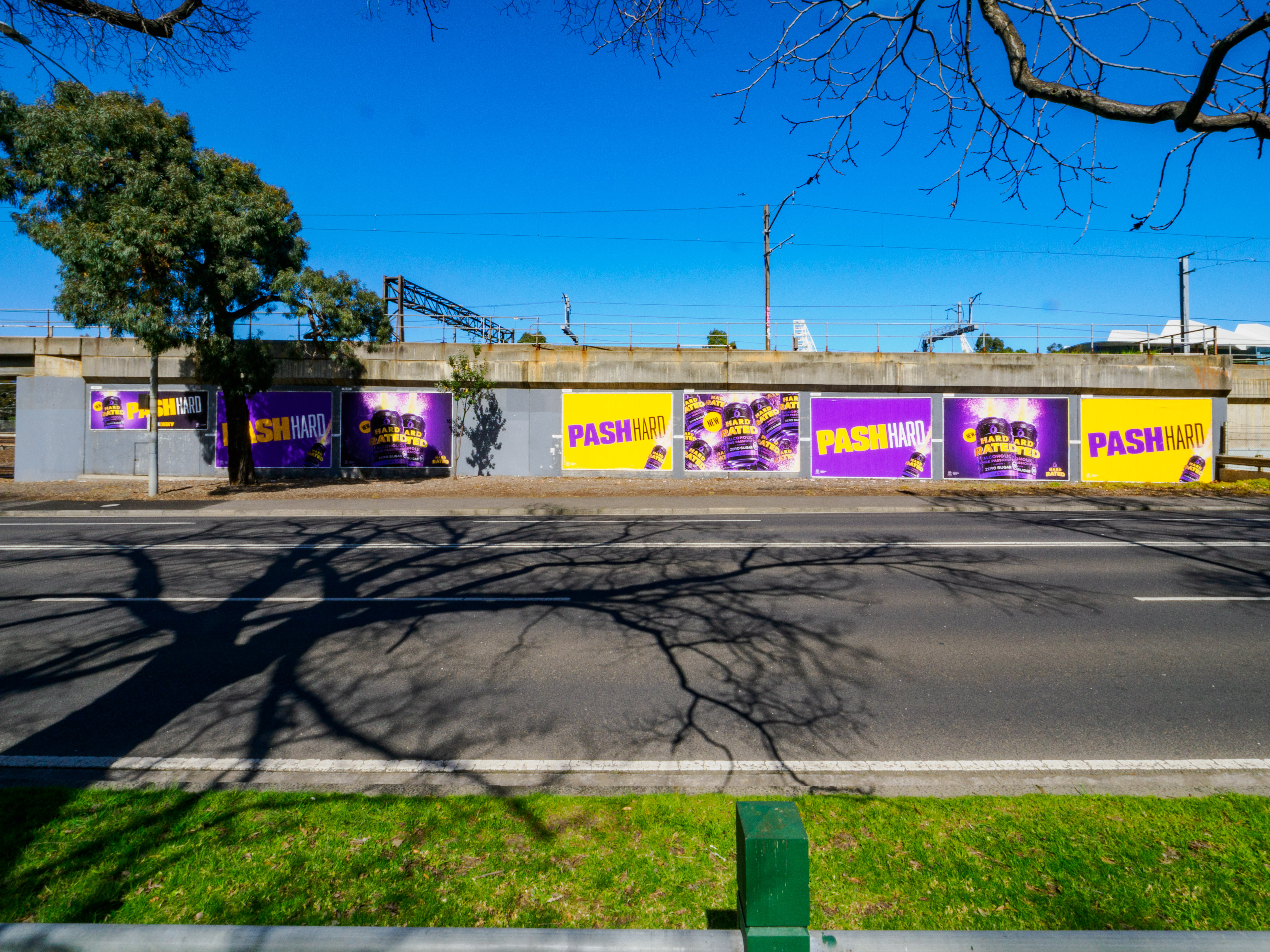
How to plan a Melbourne street poster campaign
Fitzroy and Collingwood are almost always in. They set the tone for the rest of the plan and reach the audience most likely to act on what they see.
Choose the second and third precincts by audience. Brunswick and the inner north for students; Richmond and Windsor for hospitality and sport; St Kilda for summer and tourism.
Use the CBD as a reach layer. Weight it toward Swanston Street, Bourke Street Mall and the laneways, and remember that the sensor data shows evening and lunchtime traffic holding up better than the morning peak.
Follow the trams. Melbourne’s poster corridors line up with tram routes (the 86, 11, 96, 78 and 16 in particular), which gives you a ready-made map of habitual pedestrian movement.
Run long. Analytic Partners’ Australian research found OOH campaigns running beyond eight weeks delivered nearly twice the ROI of two-week campaigns, and that suburban placements returned up to 37 per cent more than CBD-only activity. Melbourne’s high streets are the textbook case.
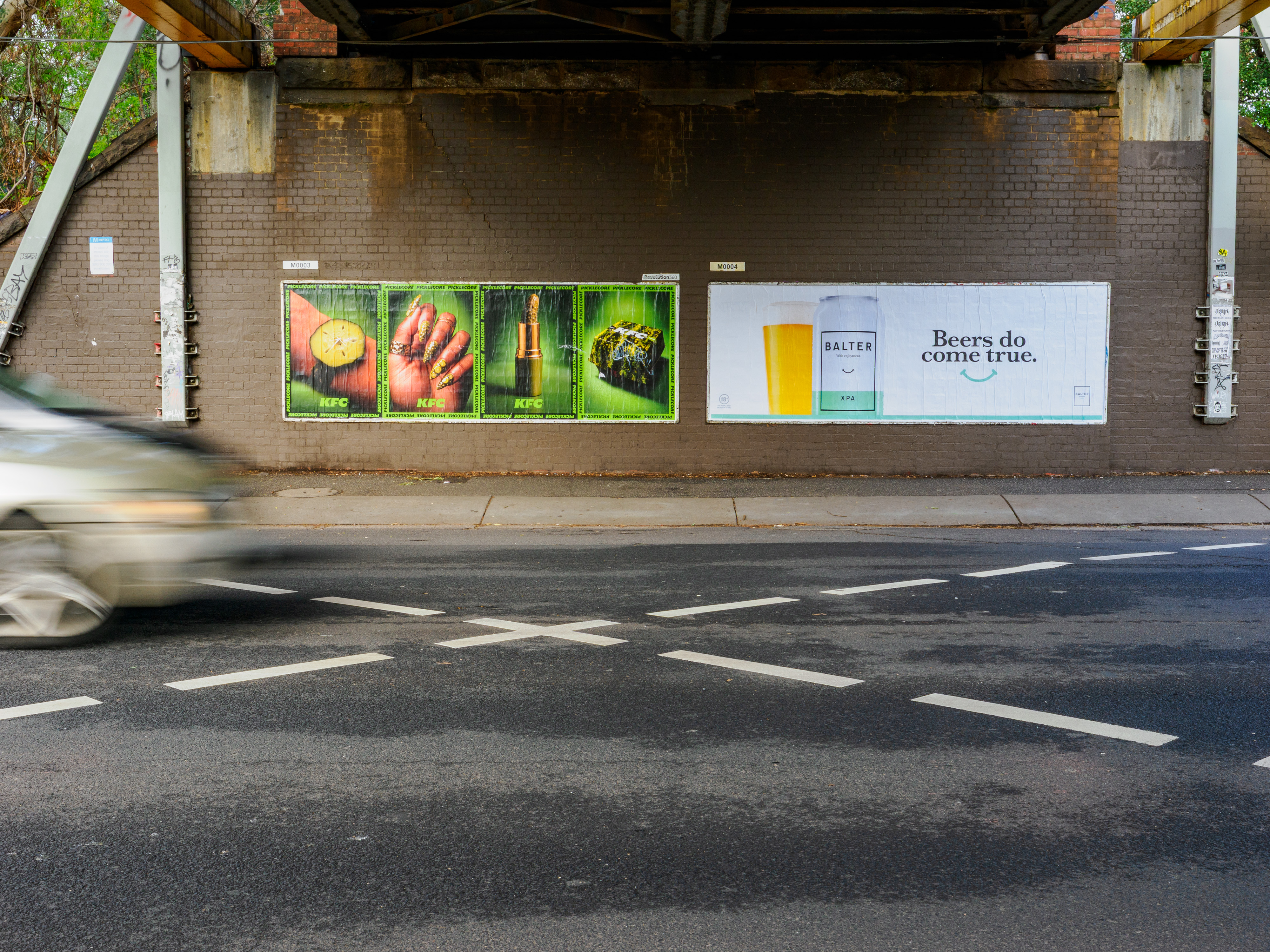
Frequently asked questions
What are the best suburbs for street poster advertising in Melbourne?
Fitzroy and Collingwood first, then Brunswick and Carlton, Richmond, Windsor and Prahran, St Kilda and the CBD. Footscray, Northcote and Southbank are strong secondary options depending on audience.
How busy is Melbourne’s CBD on foot?
The City of Melbourne’s sensors show the busiest location, Melbourne Central, averaging around 1,087 pedestrians an hour historically. Weekday traffic at Flinders Street Station is at roughly 77 per cent of pre-pandemic levels, but retail openings such as Mecca’s Bourke Street flagship have driven sharp increases in the retail core.
Why is Melbourne considered the best city in Australia for street posters?
It has the most extensive network of walkable inner-suburban high streets, an audience that habitually reads the street, and an unusually deep live music, arts and hospitality culture that suits the format.
Planning a Melbourne campaign?
Revolution360 runs its own street poster and wall mural network across Melbourne’s CBD and inner suburbs, from Fitzroy and Brunswick to Richmond, Windsor and St Kilda. We can share site-level foot traffic and venue data for any precinct in this guide. Get in touch with the Melbourne team to talk through your campaign.
Looking at the other capitals? See our guides to street poster advertising in Sydney and street poster advertising in Brisbane, or the eastern seaboard overview.
Sources
- City of Melbourne, Pedestrian Counting System
- RMIT University, Has CBD pedestrian activity in Melbourne recovered since Covid-19?
- Concrete Playground, Does anyone actually still dine and shop in Melbourne CBD? (February 2026, reporting KPMG and City of Melbourne data)
- Concrete Playground, City of Melbourne is making the CBD’s ‘little’ streets more pedestrian-friendly (March 2026)
- Colliers, CBD Retail Report 2025
- B&T, Analytic Partners OOH ROI study (May 2026)
- oOh!media / Analytic Partners, Out of Home is a growing driver of ROI (2024)


