2
September 2026
The marketing industry has spent the last fifteen years chasing pixels. We were told that print was dead, physical media was a relic, and the future of brand building lived entirely behind glass screens. Marketing managers at agencies and brands across Australia poured budgets into social feeds, programmatic display, and search engine marketing, chasing the promise of infinite scale and hyper-targeted attribution.
But a funny thing happened on the way to the digital utopia.
The digital space got crowded, expensive, and easy to ignore. CPMs on major social platforms continue to climb while organic reach has plummeted to near zero. In its Q2 2026 results, Meta reported that its average price per ad had risen 12% year-on-year, for the second consecutive quarter, even as ad impressions grew – meaning brands are paying more for the same fleeting sliver of attention (Meta, Q2 2026 Results). Organic reach tells the same story: Facebook page posts now reach an average of just 2 to 5.9% of followers, down from 16% in 2012, while Instagram organic reach has fallen 12% year-on-year (Socialinsider, 2026 Social Media Benchmarks). Consumers developed banner blindness, armed themselves with ad blockers, and learned to swipe past sponsored content without a single millisecond of cognitive retention.
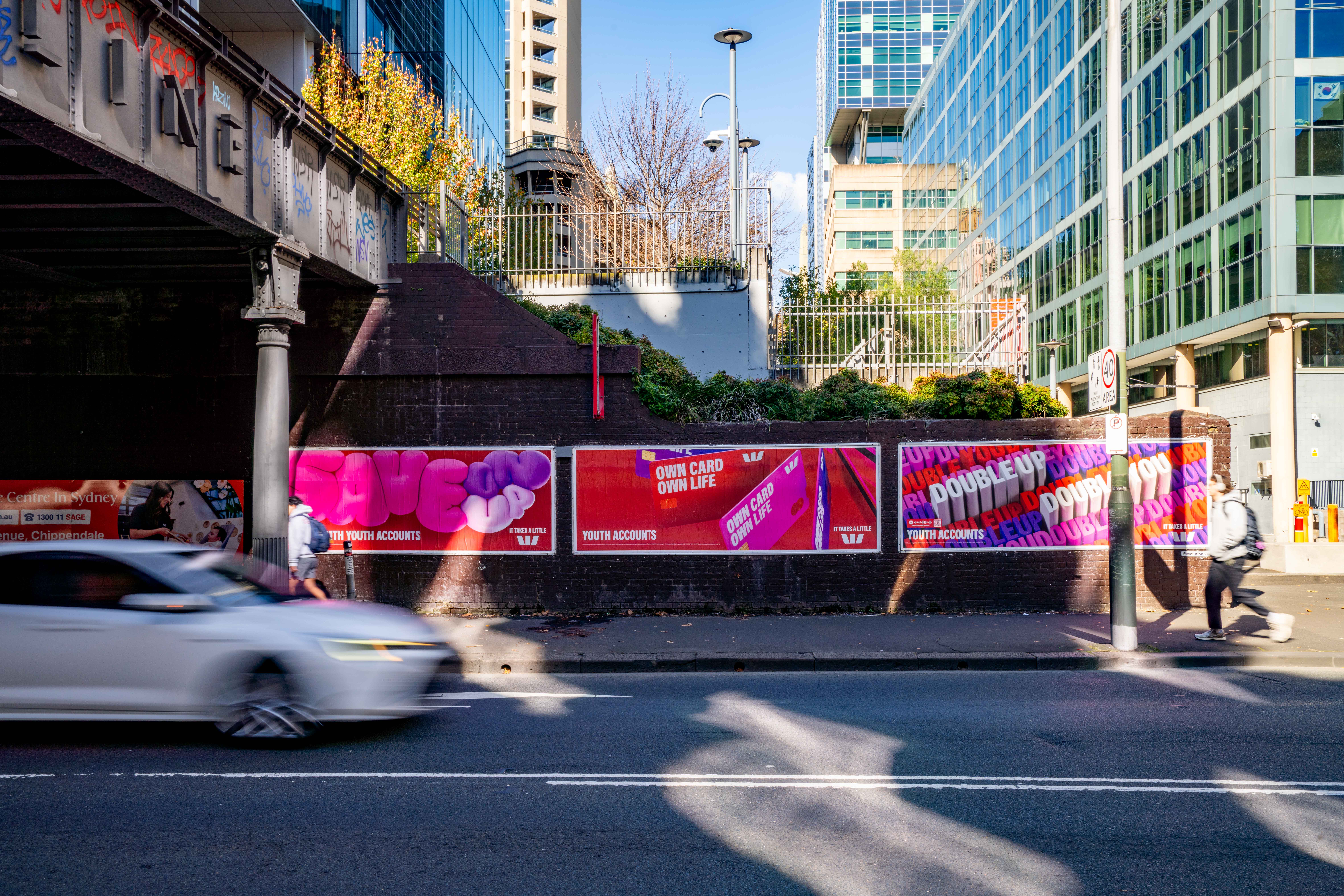
While digital platforms fight for a fleeting sliver of human attention, physical street posters continue to do what they have done for decades: command the streets, build cultural credibility, and demand to be seen.
In a digital-first world, street posters aren't just surviving. They are thriving. This is why forward-thinking Australian brands are shifting their budgets back to the pavement.
1. The Great Digital Decay: Ad Blockers, Algorithms, and Screen Fatigue
To understand why street poster advertising is experiencing a massive renaissance, we have to look at the systemic failures of the digital advertising ecosystem.
The Ad-Blocker Wall and the Scroll-Past Phenomenon
Globally, an estimated 42.7% of internet users now block ads in some form, representing over 900 million people who have actively opted out of seeing digital advertising altogether (Cropink, Ad Blockers Usage Statistics 2026). Even the most conservative Australian estimates put ad-blocker usage in the millions, and that is before accounting for the mental ad-blocking – banner blindness and scroll-past behaviour – practised by everyone else.
For the remaining 60% who do not use ad blockers, mental ad-blocking has taken over. Users have trained their brains to ignore the top three results on Google, bypass the banners on news sites, and instinctively swipe left or scroll down the moment a "Sponsored" tag appears on Instagram or TikTok. You are paying for impressions that are technically served but never actually registered by a human brain.
The Tyranny of the Algorithm
Digital advertising places your brand at the mercy of opaque, constantly shifting algorithms. A change in a platform’s auction dynamics can double your acquisition costs overnight.
Furthermore, your digital ads are displayed in highly volatile environments. Your multi-million-dollar brand campaign could be served directly adjacent to a controversial news story, a polarizing political rant, or low-quality clickbait. This environment degrades brand equity.
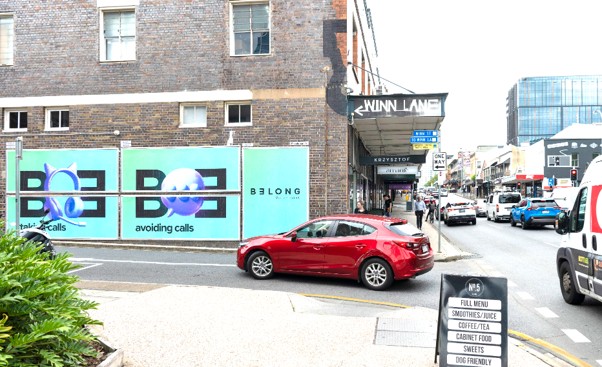
Street posters suffer from none of these issues. You cannot ad-block a 2-square-meter print poster on a brick wall in Fitzroy or Surry Hills. You cannot swipe it away, mute it, or skip it after five seconds. It exists in the physical world, standing its ground, delivering 100% viewability to everyone who walks or drives past.
2. Attention Economics: The Power of Physicality
We live in an economy where human attention is the scarcest commodity. Digital media treats attention as something that can be sliced into microseconds. Out-of-home (OOH) media, specifically street posters, treats attention as an experience.
The Science of Haptic and Physical Memory
Neuroscience research consistently shows that physical media leaves a deeper footprint in the human brain than digital media. A landmark Temple University study, funded by the US Postal Service, used eye-tracking and fMRI to compare print and digital ads and found that print advertising produced significantly greater activation in the hippocampus and parahippocampus – the brain regions responsible for memory encoding and retrieval – than digital advertising did (Venkatraman, Dimoka, Vo & Pavlou, "Relative Effectiveness of Print and Digital Advertising: A Memory Perspective," Journal of Consumer Psychology, 2021). A related Canada Post study found that 75% of participants could recall the brand behind a physical ad a week later, compared with just 44% for a digital one.
When a consumer interacts with physical media in the real world, their brain processes the information more deeply. The spatial context of where they saw the poster (the smell of coffee from a local cafe, the cool morning breeze at a tram stop, the scale of the brick wall) attaches itself to the brand message. This spatial memory anchors the advertisement in the consumer’s mind, leading to much higher recall rates when they are making a purchasing decision later.
Cultural Credibility and the "Real World" Premium
There is an implicit trust premium associated with poster advertising Australia wide. Anyone with a credit card and an internet connection can set up a website and launch a social media ad campaign in ten minutes. This low barrier to entry has flooded digital channels with drop shippers, fly-by-night operators, and low-trust brands.
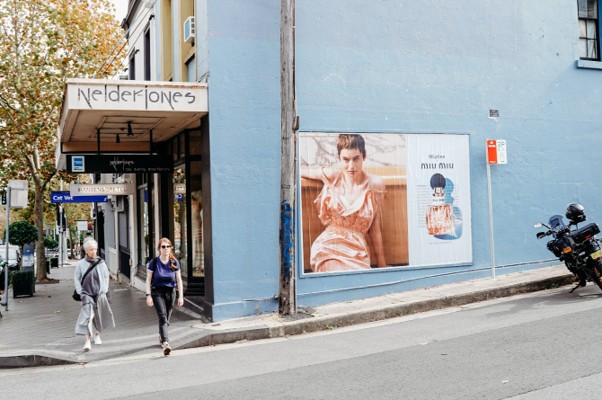
Conversely, a physical street poster campaign requires real-world execution. It requires printing, pasting, and booking physical real estate in iconic urban precincts. When consumers see a brand plastered across the streets of Melbourne, Sydney, Brisbane, or Adelaide, they unconsciously register that the brand is legitimate, well-funded, and culturally relevant. It gives your brand "street cred" that digital banners simply cannot buy.
3. Hyper-Local Targeting Without Cookie Tracking
For years, digital marketers relied on third-party cookies to track users across the web and deliver hyper-targeted ads. With the death of third-party cookies and the introduction of Apple’s App Tracking Transparency (ATT), that targeting has become blunt, inaccurate, and incredibly expensive.
Street marketing offers an elegant, privacy-first alternative: behavioural targeting based on real-world geography and lifestyle.
Targeting Lifestyles, Not Just Demographics
You do not need to track someone's search history to know what they are interested in. You just need to know where they spend their time.
• Want to target tech-savvy, affluent young professionals? You place your campaigns in Richmond (Melbourne) or Darlinghurst (Sydney).
• Want to reach the arts, fashion, and indie music crowd? You dominate the streets of Fitzroy, Brunswick, or Newtown.
• Want to capture business decision-makers? You target the fringe of the CBD and major transit corridors leading into financial districts.
By mapping your target audience’s physical routines, you can place your brand directly in their daily path. They see your poster on their morning walk to get coffee, they see it again at the tram stop on their commute, and they see it on their way to meet friends for dinner. This consistent, multi-touch exposure builds familiarization rapidly without ever feeling invasive.
4. The Unavoidable Physical Presence
The modern consumer is hyper-connected but increasingly disconnected from local communities. Outdoor advertising acts as a physical anchor in these communities.
The Consumer Real-World Journey
To illustrate how street posters integrate into daily urban life, follow this typical daily routine of an active city consumer:
1. The Departure: The consumer steps out of their home to start the day.
2. The Commute Hub: They enter a local urban transit hub, immediately encountering your first street poster. This creates a high-impact, distraction-free first touchpoint.
3. The Midday Route: While walking to a local café, lunch spot, or retail store, they walk past your second street poster location, reinforcing the message during a leisure moment.
4. The Return Journey: Commuting back home along a major arterial road or pedestrian strip, they see the poster a third time, securing mental brand recall before they even open their phone again.
High-Frequency Transit Corridors
Urban populations are growing, and with that growth comes more time spent commuting. Whether walking, cycling, waiting for public transport, or sitting in traffic, people are looking for something to occupy their minds.
Unlike highway billboards that are zipped past at 80 km/h, street posters are positioned at eye level in high-dwell-time environments. Pedestrians waiting for a light to change, commuters standing on a train platform, or patrons sitting at outdoor cafes have the time to look at, read, and absorb your creative execution.
Co-existing with Urban Architecture
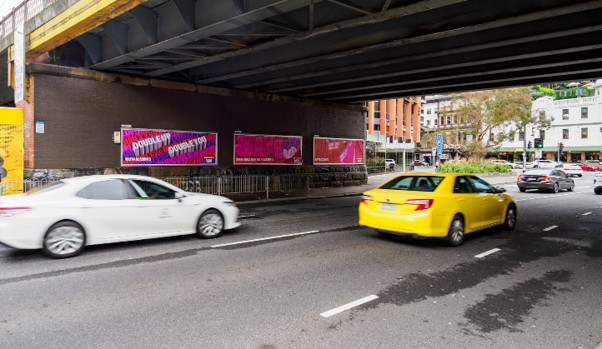
Street posters do not disrupt the environment; they contribute to the visual fabric of the city. Excellent creative design turns a street poster into street art. It becomes a talking point, a backdrop for social media photos, and an integral part of the neighbourhood's character. This integration makes the advertising feel like an invitation rather than an intrusion.
5. Integrating Physical and Digital: The True Omnichannel Play
The smartest marketers do not view physical and digital as an "either/or" proposition. They understand that street posters are the ultimate primer for digital performance.
Driving Search and Social Action
When a consumer sees a striking street poster, their immediate reaction is often to pull out their smartphone. They search for the brand, visit the website, or look up the Instagram profile on the spot.
By running street posters alongside your digital campaigns, you significantly lower your digital acquisition costs.
• Higher CTRs: Consumers are much more likely to click on a search or social ad for a brand they already recognize from the physical world.
• Lower CPCs: Increased click-through rates improve your ad relevance scores on digital platforms, driving down your cost per click.
• Higher Conversions: Real-world trust translates directly to online conversions.
The Instagrammability of Print
A well-designed, provocative, or visually stunning street poster campaign becomes content in its own right. Passersby take photos of the posters and share them on their own social media channels, giving your campaign free viral reach. Your physical poster in Sydney can quickly be viewed by thousands of people on Instagram or TikTok across the globe.
Frequently Asked Questions (FAQ)
How do we measure the ROI of street poster campaigns?
While you cannot click on a physical poster, measurement has evolved significantly. At Revolution360, we use a combination of advanced OOH measurement platforms such as MOVE and 360Intelligence, mobile location data, and digital uplift tracking.
By analysing foot traffic patterns, mobile device proximity, and comparing brand search volume, social media engagement, and website traffic in targeted postcodes before, during and after a campaign, we can demonstrate direct attribution and ROI. Many clients also use campaign-specific QR codes or landing page URLs to track physical-to-digital conversions directly.
Is street poster advertising legal in Australia?
Yes, when managed by a professional media agency like Revolution360. There is a common misconception that street posters fall into the realm of illegal "wild posting."
While illegal billposting still occurs and carries heavy fines, Revolution360 operates on an entirely commercial, fully council-approved, and leased network of exclusive poster frames and walls across Australia. When you book with us, your posters are legally compliant, safely installed, and maintained throughout the duration of your campaign.
How do street posters compare in cost to digital ads?
On a Cost-Per-Thousand (CPM) basis, street posters are one of the most cost-effective media channels available.
Unlike digital ads, where CPMs are highly volatile and bidding wars can spike your costs during peak retail seasons (like Black Friday or Christmas), street poster pricing is stable and predictable. You secure highly visible, physical real estate for a set period, delivering continuous impressions 24 hours a day, 7 days a week, without any incremental costs per view or click.
What is the production turnaround time for a campaign?
Our production pipelines are highly efficient. Once your creative artwork is approved and finalized, printing and preparation typically take 7 to 10 business days.
Our professional posting crews then execute the physical installation on our scheduled posting days, ensuring your campaign goes live across your targeted locations rapidly and seamlessly.
Get Your Brand Back on the Streets with Revolution360
In a landscape dominated by fleeting digital impressions, the brands that stand out are the ones that occupy real-world space. They are the brands that make themselves impossible to ignore, building trust, cultural relevance, and undeniable presence where their audience actually lives, walks, and plays.
Revolution360 is Australia’s premier street poster and out-of-home media specialist. We own and manage an extensive, high-impact network of legal, premium street poster sites in key metropolitan markets across Sydney, Melbourne, Brisbane, Adelaide, and Perth.
We do not just put up posters. We strategize, curate, and execute high-impact street campaigns that get your brand talked about, shared, and remembered.
Whether you are launching a new product, promoting an upcoming tour or event, or looking to build long-term brand equity in Australia's most competitive urban markets, our team of experienced media planners will help you design a campaign that delivers real, measurable impact.
Ready to dominate the physical world?
Contact the Revolution360 team today to discuss your next campaign, explore our interactive site maps, and secure your brand's place on the streets of Australia.
Sources
Meta, “Meta Reports Second Quarter 2026 Results,” investor.atmeta.com, July 2026
Socialinsider, 2026 Social Media Benchmarks Report
Cropink, “Ad Blockers Usage Statistics 2026.”
Canada Post, cognitive load and brand recall study on direct mail vs. digital advertising.


