10
May 2026
Street poster advertising has quietly become one of the smartest ways to dominate urban attention. While digital channels get noisier and more expensive, high-quality, legal street posters keep working day and night—broadcasting your brand at eye level where people actually live, commute, and socialise.
In this guide, we’ll unpack what street poster advertising really is, how it compares on cost and effectiveness, and how to plan a campaign that you can confidently defend in a boardroom.
What Is Street Poster Advertising?
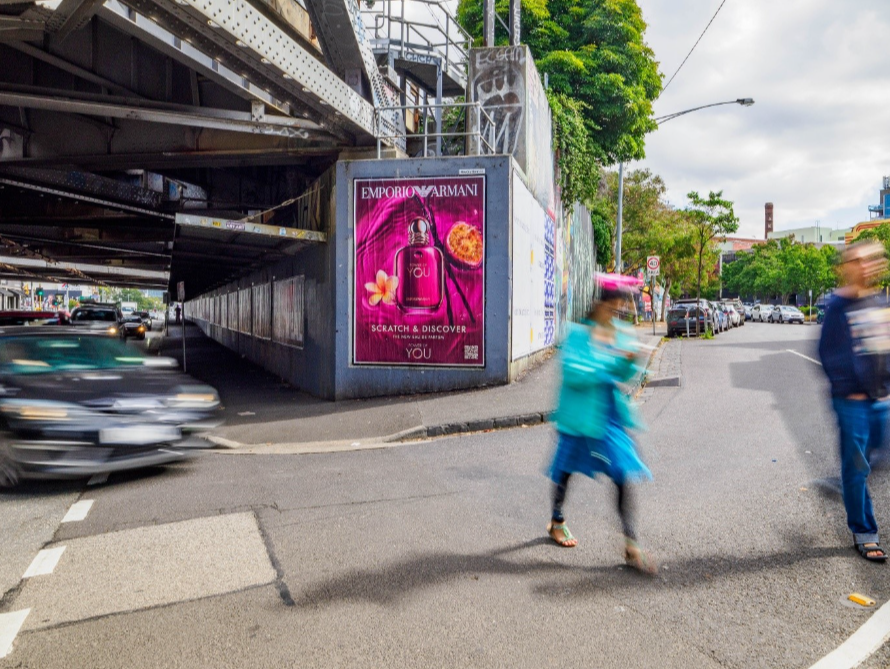
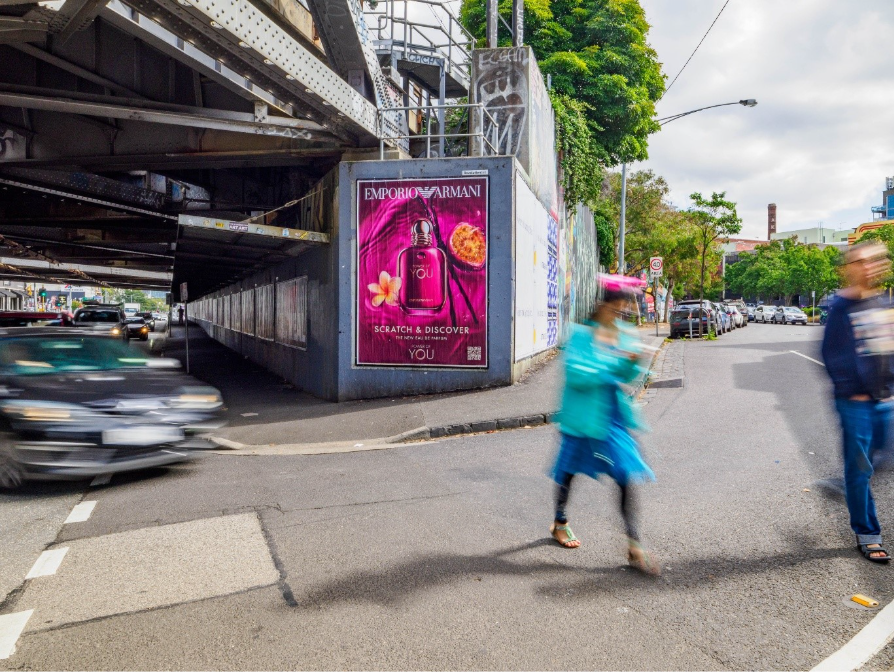
Street poster advertising sits within out-of-home (OOH) but behaves very differently from a roadside billboard or a programmatic digital screen. At its best, it is a curated network of high-visibility, legal poster sites in busy urban areas—think transport interchanges, high-footfall streets, and key lifestyle precincts.
Where generic flyposting covers walls in random layers, premium street poster networks use dedicated frames, quality print stock, and formal concessions with transport authorities and property owners. That means no illegal placements, no messy overlaps, and a consistent, brand-safe canvas for your creative.
A simple way to think about it: if billboards are the “highway shout”, street posters are the “street-level conversation”. They are close enough to touch, impossible to scroll past, and naturally integrated into daily urban routines.
Why Street Posters Still Win in a Digital-First World
It can feel counterintuitive to lean into print when your dashboards are full of impressions, clicks, and conversion paths. But that’s exactly why more brands are rebalancing towards OOH. In Australia, MOVE data shows that OOH reaches around 97% of Australians aged 14+ each week, giving it near-universal coverage in major cities.[1][2]
When you overlay that with effectiveness data, the picture is even stronger. Research from Analytic Partners found that brands allocating more of their budget to OOH see, on average, a 17% stronger marketing ROI, and when OOH is combined with TV it can deliver around 27% higher ROI than TV alone at the same spend.[3]
Put simply: street posters don’t just look good; they help everything else you’re doing perform harder. They supercharge brand familiarity, which in turn lifts search, social, and retail performance.
Think of your media mix like a band. Performance channels are the percussion - fast, measurable, and tactical. Street posters are the bass line. You might not talk about them in every report, but they’re what make everything else feel powerful and memorable.
Benefits of Street Poster Advertising for Brands
1. Massive Urban Reach With Local Precision
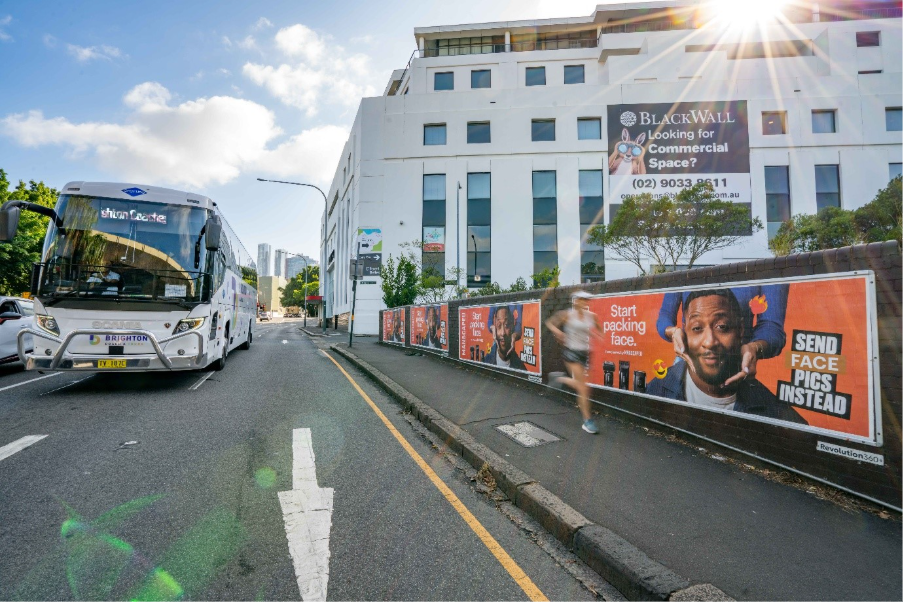
Street posters are built for metropolitan life. In suburbs across Sydney and Melbourne, they meet people where they walk: to the station, the café, the gym, the stadium, the gig.
What makes them so effective is the balance between scale and precision. A national billboard campaign may cover many regions you don’t need. Street posters can target specific postcodes, streets, or corridors that matter most to your audience—whether that’s young professionals near inner-city rail hubs or families around key retail centres.
For brand managers and agencies, this means you can:
You’re not just buying reach; you’re buying context.
2. High Impact Creative at Eye Level
Unlike many digital formats that appear in a fraction of a second, street posters live in the physical environment. The canvas is large, stable, and dedicated to your brand. No split screens, no carousels, no “ad 3 of 7”.
This gives you the freedom to go bold with colour, typography, and imagery. Brands use street posters for:
A powerful analogy is to think of street posters as “physical social tiles”. The best work is visually punchy, quickly readable, and distinctive enough that people photograph and share it, extending the campaign into digital channels organically.
3. Proven Effectiveness and ROI Uplift
One of the common questions marketers face internally is: “How do we prove this works?” OOH as a category has built a strong evidence base.
Global and Australian studies have consistently found that:
When street posters are integrated into a broader OOH and digital mix, they become a visible anchor that makes every other impression feel more familiar. Shoppers don’t always remember where they saw you first; they simply have a stronger sense that you are “everywhere”.
4. Flexibility, Speed, and Creative Experimentation
Compared with some large format or broadcast channels, street posters are relatively quick to brief, produce, and install. That makes them ideal for:
You can also layer formats—for example, pairing a domination of street posters around a precinct with a hero hand-painted mural that becomes the social media magnet for the campaign.
5. Sustainability and Brand Responsibility
For many marketing leaders, sustainability is no longer a “nice to have”—it’s a non-negotiable. Street poster campaigns can align strongly with ESG goals when they use:
Choosing partners who operate legal, well-maintained sites also helps protect neighbourhood character and brand safety. You’re not contributing to visual pollution; you’re investing in curated, compliant street media.
How Much Does Street Poster Advertising Cost?
Costs will always vary by market, environment, and scale, but there are common levers that drive pricing and value.
Key Cost Drivers
If you’re used to digital media buying, a helpful analogy is to think of each street poster frame as both an “impression generator” and a “mini billboard”. You are paying for:
- Access to curated legal inventory in prime locations.
- Production and installation of high-quality prints.
- Maintenance, including keeping frames clean and graffiti-free.
- Campaign analysis and reporting where audience analytics tools are used.
Well-structured campaigns often cost less than large format OOH, while still delivering serious share of voice in targeted urban pockets. That makes them attractive for budget-conscious marketers who still need a visible, fame-building channel.
Measuring the Effectiveness of Street Poster Campaigns
Modern OOH measurement has moved a long way from simple “traffic estimates”. With platforms like MOVE and advanced analytics, marketers can now link street poster activity more directly to audience exposure and business outcomes.[1][5]
Core Metrics to Track
When combined with your own first-party data—such as sales, website analytics, or app usage—you can start to see clear patterns. For example, brands often observe spikes in branded search or store visitation in neighbourhoods where street poster activity is concentrated.
To make those stories credible in front of stakeholders, it helps to enter the campaign with a clear measurement hypothesis. For instance: “We expect to see a 15–30% uplift in branded search in postcodes surrounding our poster clusters during the flight period.”
Street Posters vs Other Out-of-Home Formats
Street posters sit within a broader OOH toolkit. The right mix depends on your objectives, geography, and budget.
In practice, some of the most effective campaigns use street posters as the connective tissue: the format that repeats your idea consistently across a city, while larger or digital formats add extra drama.
Best Practices for High-Performing Street Poster Campaigns
1. Start with a Clear Objective and Audience
Every successful campaign starts by knowing exactly who you’re trying to reach and what you want them to think, feel, or do. For street posters, useful objectives include:
From there, define your core audience and how they move through the city. If they’re rail commuters, focus on the station environs and connecting streets. If they’re nightlife seekers, prioritise entertainment and hospitality precincts.
2. Choose the Right Locations and Formats
Location is where strategy meets reality. Work with partners who have exclusive, legal access to high-quality frames and walls across major cities. This isn’t just a compliance issue; it’s a creative one. Clean, well-sited frames showcase your brand the way it deserves to be seen.
A practical approach is to map your customer journey geographically:
By clustering frames along these paths rather than scattering them randomly, you build a narrative people encounter multiple times over a week.
3. Design Creative for the Street, Not the Screen
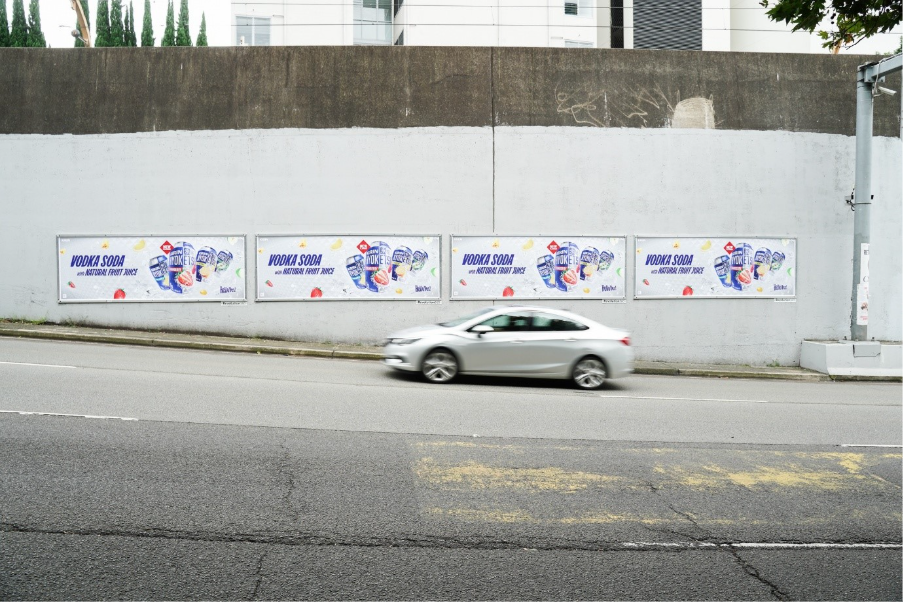
Street posters have their own design grammar. The most effective creative follows a few simple rules:
If in doubt, print your design at A3, stick it on a wall, step back, and give yourself two seconds to look. If you can’t read it or recall it, simplify.
4. Connect Physical Posters to Digital Journeys
OOH and digital aren’t competing; they are compounding. That’s especially true in street environments where people have phones in hand.
Ways to bridge street and screen include:
Because OOH can lift branded search and online engagement by significant margins when part of an integrated mix, these connections help you prove value and close the loop with stakeholders.[5]
5. Plan for Measurement and Learning
Before your posters hit the wall, agree on:
After the campaign, review not just whether it “worked”, but where and why. Which suburbs overperformed? Which creative versions resonated? What did you learn that can shape the next flight?
Over time, this builds a proprietary playbook for your brand—a pattern of locations, formats, and creative cues that you know deliver.
Bringing It All Together
Street poster advertising is no longer the scrappy cousin of “big” outdoor. In Australia’s major cities, it has evolved into a premium, measurable, and strategically powerful channel that can hold its own in any media plan.
For brand managers and agencies under pressure to prove both impact and responsibility, the combination is compelling: legal, high-visibility sites; sustainable materials and processes; robust analytics; and genuinely creative canvases that make brands part of the urban story, not just wallpaper.
If you treat street posters as a strategic backbone rather than a last-minute add-on, they repay you with more than just impressions. They give your brand presence—physical, memorable, and hard to ignore.
Cited Sources
[1] MOVE study reveals outdoor media reaches 97% of Australians
[2] MOVE & OMA Reveal Out Of Home Reaches 97% Of Australians Weekly
[3] Out of Home is a growing driver of ROI in media mix – Analytic Partners research
[5] Out-of-home (OOH) Advertising Statistics 2025
Frequently Asked Questions
How effective is street poster advertising compared to digital ads?
Street poster advertising delivers strong local visibility that digital ads often struggle to match, putting your message directly in the physical path of your target audience. Unlike online ads that can be skipped, blocked, or lost in a feed, posters occupy real-world space where they're seen repeatedly by foot traffic and commuters throughout a campaign. Revolution360 helps clients choose high-impact locations across Australia so every poster placement works harder for your budget.
How much does a street poster campaign cost, and what's included?
The cost of a street poster campaign depends on factors like the number of posters, locations, and campaign duration, but it's often more affordable than most businesses expect — especially relative to the reach you get. At Revolution360, we handle everything from design-ready printing through to placement and compliance, so you're not juggling multiple suppliers. If you reach out with your goals and target areas, our team can put together a tailored quote that makes the most of your budget.
How do I know where my street posters will be placed and whether they're still up?
With Revolution360, you'll know exactly where your posters are going before a campaign launches, with site recommendations based on foot traffic, audience demographics, and local visibility. We also provide proof-of-placement reporting so you can see that your posters are up and performing as planned. It's that transparency and hands-on management that gives our clients — from independent venues to national brands — confidence that their investment is actually being seen.


.png)